

Happy Juneteenth!
Before I dive into today’s essay, I want to alert you to an issue we had with the Wednesday newsletter. Alicia did an amazing job interviewing a 41-year-old woman who has been giving away big chunks of her inheritance. For some reason the subject line or the content triggered something bad, and the email has been flagged by Google as a phishing attempt. As a result, the newsletter was sent to a lot of your spam filters. We’re so sad because we love this story so much! But also as an email-centered media company, it’s not great when Google flags our work as spam.
We have a big favor to ask: Could you check your spam folder to see if the newsletter is in there? And if it is, open it and mark that it’s not spam? And if it is in your regular inbox but it has a scary red box at the top that reads, “THIS LOOKS LIKE PHISING,” please mark it as safe!
Thank you!
—
When Alicia and I started talking about doing a package of stories around inheritance, we knew we wanted to write about the Great Wealth Transfer. It’s been a hot topic in business media for a few years now, in part because this huge transfer of assets could finally force financial services companies to change the way they do business, in theory, because their client base will be changing.
When I set out to write this essay, I thought it would be about how women stand to be the primary beneficiaries of this massive money shift: $40 trillion will transfer to Boomer widows, according to an oft-quoted report from Cerulli Associates. In turn, it’s predicted that millennials and Gen X will inherit $85 trillion over the next two decades. Financial services companies are falling all over themselves trying to figure out how to cater to these new clients who aren’t necessarily interested in working with their dads’ (or, in the case of the widows, husbands’) wealth advisors.
But as I’ve been digging through all the articles on this topic, I’ve been on a bit of an emotional rollercoaster that I wasn’t prepared for.
It’s impossible for me to think about the Great Wealth Transfer and not think about my own parents. I feel like so many of the women who answer the Home Economics question, “Do you expect to receive (or have you received) an inheritance from a family member?” I know I might at some point inherit something from them, but I truly do not want that day to come. And it makes me very sad to think about it.
But as I read through many articles on aging Boomers (who start turning 80 this year) and by extension the Great Wealth Transfer, I was surprised that I also felt angry. This generation still holds a disparate amount of money and power. The most frustrating stat I came across was from The Atlantic: “Half of all the money donated to political campaigns comes from Americans age 66 and older.” Not to mention the average age of a primary election voter is 59. And well, it’s the primaries that dictate the outcome of a general election.
The Boomers also have more wealth than any generation. Arguably this isn’t surprising: They’ve had more time to accumulate said wealth. But there’s something about this mixture of wealth and political power that gives me pause. I don’t expect Gen X and millennials (and OK, our younger Gen Z siblings) to have as much money, but why aren’t we flexing our political muscle more? It’s free to vote, guys. (Alicia and I are in a friendly fight over this point. I realize I’m grossly oversimplifying this, and there are whole books written on the topic of our dying democracy, but I will die on the “it’s important to vote in every election and especially in the primaries” hill.)
While it feels like the Boomers hold all the wealth and power, inevitably things are going to change. Despite the billions being spent on longevity technology, they won’t live forever. And how younger Americans step into their positions of power presents an interesting set of questions and challenges.
Politically, Boomers are leaving us a bit of a mess. Let’s not even talk about our president. Congress is dominated by geriatric politicians, many of whom have publicly embarrassed themselves when issues of technology have arisen. Should they really be the ones responsible for dictating laws about AI and social media when they don’t know how this tech even works? As Alicia wrote last week, our current politicians are doing exactly nothing to deal with the looming Social Security crisis. And most of the time it feels like every Republican in Congress, regardless of age, is deadset on destroying our collective futures, whether they’re rolling back environmental protections or cutting Medicaid benefits.
But the issue of Medicaid is actually an everyone problem, not an issue to worry about in the future. And while the Boomers might be the generation with the most money, there’s also a huge wealth disparity among the 67 million of them. While the richest will pass on their fortunes to their heirs, there’s a good chance the middle class Boomers could end up spending pretty much all of their retirement nest eggs on long-term care.
At least in my little media bubble, the exorbitant cost of child care (rightfully) gets a lot of attention. But you know what’s even more expensive? A nursing home. Stats from CareScout found that in 2025, the average cost of a private room in a nursing home is $129,575 a year. If a married couple ends up in an assisted living facility for four years, they could easily burn through $1.5 million.
Medicare doesn’t cover long-term care. And in order to have Medicaid pay for it, a family must have exhausted pretty much all of their assets. They can hold onto their home, but after death, the federal government reserves the right to take equity from that home to retroactively pay for care. For the millions of Boomers whose wealth is tied up in their houses—and for their children who thought they’d inherit these homes one day—that’s terrible news.
It gets worse: Among all the crappy legislation that was crammed into the One Big Beautiful Bill Act there were significant cuts to Medicaid, which means fewer Americans will have access to these long-term care benefits.
In reporting out this piece, I also felt a sense of frustration rising. There’s a lot of generational tension right now as it feels like the Boomers are holding on to their power for a beat too long and millennials and Gen X seem to struggle to find their footing as leaders. In an earlier version of this essay, I argued the solution was for the younger generations to vote more. Alicia pushed back that it’s not fair to blame people for not voting, as we’ve watched gerrymandering sweep the country, billionaires literally buy elections, and young people increasingly come to feel that our votes really don’t count.
But I’m not someone who likes to throw my hands up in disgust and resignation. (And Alicia isn’t either!) We can’t always sit around and blame Boomers for our problems while hoping they’ll leave us a small fortune. The oldest millennial is well into their 40s, the oldest Zoomer is about to turn 30, and Gen X is already staring retirement age right in the face. We’re grownups! And we need to push back against any narrative that suggests otherwise.
We also need to talk to our parents about their finances. I’d argue that’s one thing millennials (and Gen X) do pretty well (or maybe, again, that’s just the bubble I live in). While financial service companies are trying to figure out how they can get a piece of the Boomer widow fortunes, we, their children, should be trying to figure out how to help guide these big money conversations.
There’s a lot on the line. And there are ways younger generations can help usher in this shift of power and transfer of wealth with grace and respect and without anger and finger-pointing. Let’s not squander the opportunity.
-Lindsey
The Great Wealth Transfer in the news
- I found this op-ed from MarketWatch on the three powerful forces draining family wealth to be really helpful in reporting this piece.
- I absolutely love when The New York Times opinion section does a focus group interview. The Boomer one is fascinating.
- Boomers aren’t just leaving us their wealth; they’re leaving us their stuff. So. Much. Stuff.
- Overwhelmingly, when Home Ec writers say they expect to receive an inheritance, they’ll add they don’t count that money when they’re making their financial plans. That tracks with a 2025 survey from JP Morgan Chase that found 93% of women aren’t depending on an inheritance to help them reach their financial goals.
- The New Yorker went long on gerontocracy in America. There’s a lot of frankly wild stats about how much political and social power (and wealth) Boomers hold. The Atlantic also did a long read on this topic. Both pieces were inspired by the new book Gerontocracy in America by Yale law professor Samuel Moyn.
- The Harris Poll did a deep dive into the Great Wealth Transfer, specifically surveying older Americans who had over $1 million in assets to give away and younger Americans who stand to inherit more than $500k. While both groups prioritized the same top-three investing goals, the younger generation had more interest in the social consequences of their investments.
- This wide-ranging interview with financial expert Ramit Sethi is really fun and interesting, but it’s his one line about Boomers giving their fortunes to their kids now, and not when they're dead, that’s been getting the most attention (and inspired the arguably click-bait-y headline). Still, Ramit has a point! (And we will have an article on this topic soon!)
- Not surprising: Navigating Medicaid and long-term care is ridiculously confusing. Friend of The Purse Jeanne Pinder has a super helpful site Clear Health Costs that tackles all kinds of health insurance topics, including how to understand Medicaid.
- There’s a connection to be drawn from the Great Wealth Transfer to the struggles of the sandwich generation, millennials and Gen Xers who are both raising kids and caring for aging parents. It’s a lot of work, and it can have a big (negative) impact on their careers.
What else we’re reading (and watching and listening to)
- I read a lot of good stuff this week, probably because I was procrastinating doing my actual work. This piece by John Paul Brammer about learning to read more resonated with me, as did Glynnis MacNicol’s piece on how to be a “real” New Yorker. I’m slowly making my way through the big Bloomberg feature on peptides, and The New York Times has a tough but important read on caring for abusive parents. I also started Belle Burden’s Strangers, which had my blood pressure rising from about page three. - Alicia
- I’m glad Alicia is reading stuff! I have nothing to add here! But I am looking for a new audiobook if anyone has any recommendations? -Lindsey
- I can’t stop watching clips from the Las Culturistas Culture Awards (I also watched it live Wednesday night), but more specifically, Matt and Bowen’s cover of the Pokemon theme song. As my friend Jen said, their vocals are…stunningly good, which makes it all the funnier. -Alicia
What’s on our radar
- This week, I got a renewal notice from The New Yorker, and it included something I’ve never seen before: It said that “an automated process was used to determine” a $169.99 renewal rate, as opposed to the regular rate of $160. In New York, companies have to disclose when they are using algorithms to set prices. Has anyone else seen this? And why do I feel sensitive about being given a higher price?? (I subsequently canceled my renewal, FWIW!) - Alicia
- Friend of The Purse AJ Ayer’s new book, Creative Money, is available for pre-order! It comes out in November, and it’s going to be a must-read! In the meantime, I highly recommend her newsletter, Money Changes Everything. -Lindsey
TikTok of the week
@babylist The answers to your biggest money questions — we brought in the experts to get into it all. From how to negotiate medical debt, to what a bigger family actually costs, to where to start when it comes to getting your finances in order — no question is off the table. Link to listen in bio.
♬ original sound - Babylist - Babylist
Comment of the week
“I inherited 6-figures after my mom passed away. I believe the sum was as large as it was because my dad passed away when I was little and my mom had invested the money. My mom didn’t retire until the last couple months of her life.
“I would rather have my mom than her money, but because of the money I was able to move from Indianapolis to Boston. Majority remains untouched, but I’ll occasionally take small amounts out to pay for parts of a vacation that I wasn’t able to cover through bonuses or profit-sharing I receive through my job. I mostly still live within my means, but it’s nice to know there’s money there if I find myself in a pinch.”
- Sarah Schmidt answering this week’s question: Have you ever inherited any money?
What else we’ve published on The Purse this week
It was a busy week!
Meal planning ideas for single folks! (For paid subscribers.)
 Alicia Adamczyk
Share your inheritance story.
 Lindsey Stanberry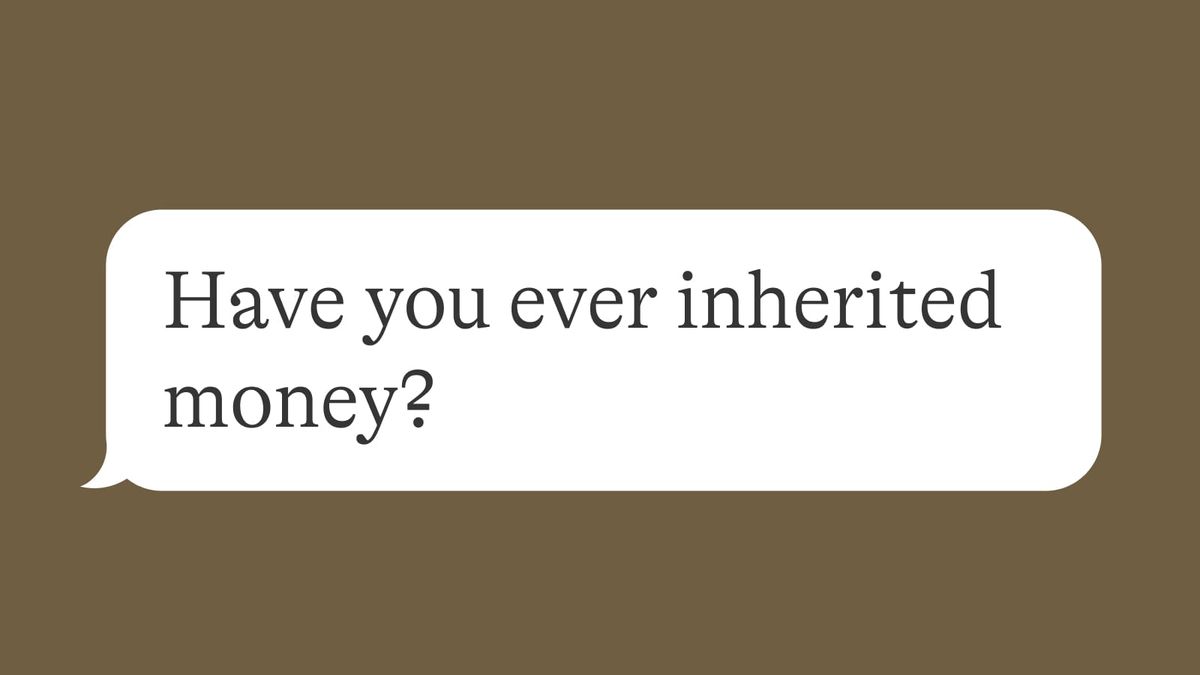
Do you have what it takes to be an executor of your parents’ estate?
 Alicia Adamczyk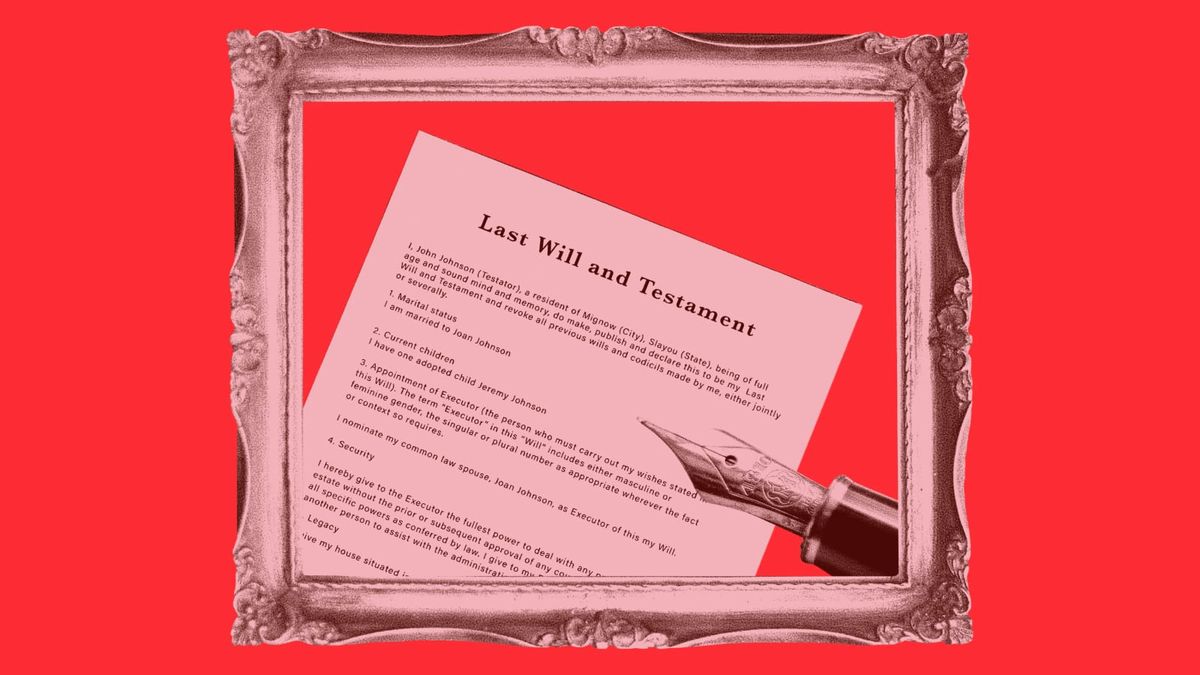
What it’s like to give away your inheritance.
 Alicia Adamczyk
It was a fun mailbag episode of Family Money.
 Lindsey Stanberry
Alicia answered a reader question about protecting assets from an ex in the event of death after divorce. (For paid subscribers.)
 Alicia Adamczyk
Best money we spent this week
- We did a big Costco order this week and also had to renew our membership, so that’s where most of my money went. I’m not complaining; I love having all the snacks on hand. That said, I spent way too much money on coffee, as we’re waiting for the beans we like to be delivered. The Kirkland brand just can’t compete with Stumptown. ($300 on Costco) - Alicia
- I’m really not very fun right now (all work and studying and fussing, just ask Ken and Freddy), and by extension, I haven’t spent much money. I even canceled plans to see my friend Laura for lunch this week. But she called me out of the blue on Wednesday just to talk, and we yapped for 45 minutes, and it was great and free. I highly recommend randomly calling your friends from time to time. -Lindsey


