

What do explosive diarrhea and your 401(k) have in common? Thanks to cuts to consumer protections and government funding by the Trump administration, you need to be worrying about both a little bit more than usual these days.
One of the Trump administration’s explicit goals is to roll back regulations and legislation that protect average people. Doing so would benefit of businesses and the investor class. Trump idealogues and members of his administration are not particularly subtle about this.
They’ve also been incredibly successful. Over the past year and a half, we’ve seen the complete hobbling of the Consumer Financial Protection Bureau, a coterie of 20-something nincompoops with no work experience defund everything from weather balloons to food safety tracking (all while jeopardizing of our Social Security numbers), and even the end of a Biden-era rule that would require airlines to pay travelers if they mess up our flights.
As a result, consumers are paying more and getting so much less in return, all while trying to figure out if the lettuce in their takeout taco is going to make them violently ill.
Every single consumer protection that we’ve seen rolled back deserves attention. But I want to zoom in on the administration’s meddling in your 401(k). While this could be classified more as a worker protection problem than a consumer issue, the result is the same: Normal people will get screwed.
Last month, ProPublica reported that the Trump administration is actively trying to roll back regulations that protect employees’ 401(k)s and how they are managed. I’ve already written about one way this is playing out, with the Department of Labor allowing 401(k)s to invest in riskier assets like private equity and crypto. The DoL creates retirement-account regulations and enforces ERISA.
 Alicia Adamczyk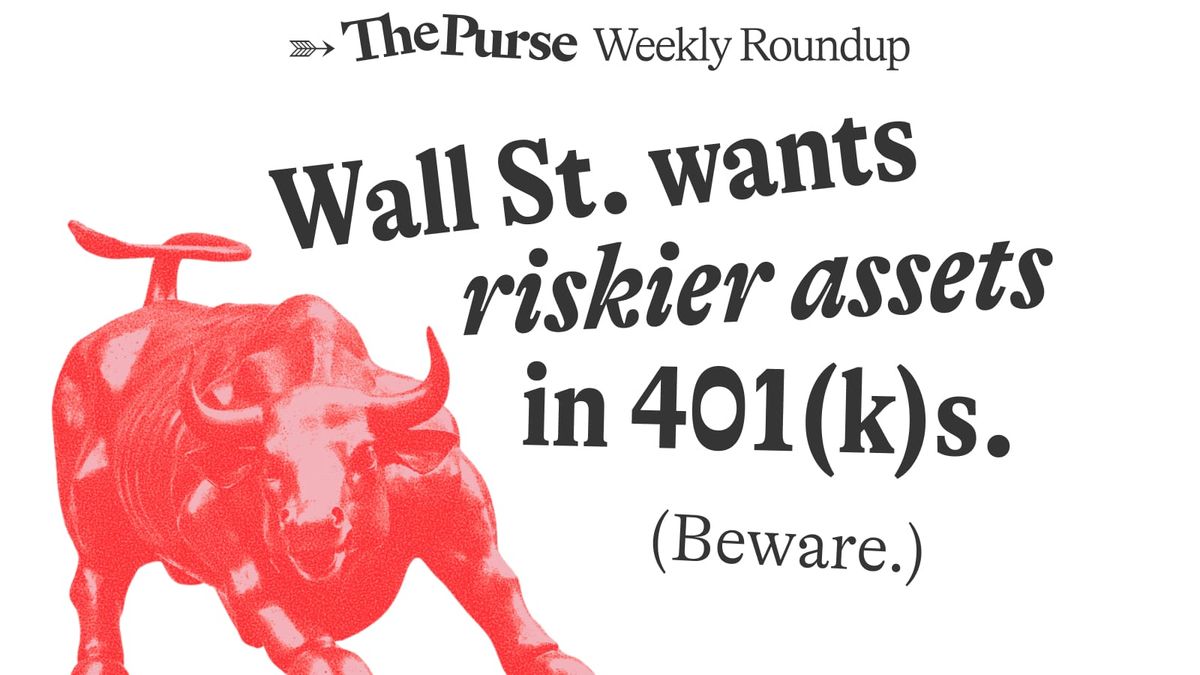
ProPublica highlighted another less sexy but potentially more problematic roll back: The Trump administration is going after the regulation that allows workers to sue their employers and hold them accountable when 401(k) plans are mishandled.
Bear with me on some important but kind of boring context. Your 401(k) is governed by ERISA, or the Employee Retirement Income Security Act, which was passed in 1974. And under ERISA, your employer has a fiduciary duty to its employees.
“Fiduciary” is an extremely high standard. It means your employer and plan sponsor have to act in your best interests—not the interests of investment firms or other companies trying to make money off of you. A fiduciary’s number-one priority is making sure your money is thoughtfully invested.
In practice, this means that most 401(k)s offer extremely low-fee, diversified index or mutual funds for retirement sold by reputable financial firms, rather than high-fee, opaque instruments being sold on commission by a friend of your company’s benefits manager.
If your company does the latter, you can sue them, and workers do this all the time (and win). Employers generally take this responsibility extremely seriously to avoid litigation.
But the government is trying to do away with that option—or at least make it a whole lot harder to sue. The Trump administration has put a lawyer in charge of the Employee Benefits Security Administration who “previously ran a firm that helped large companies protect themselves against worker lawsuits,” according to ProPublica. The fox is in the henhouse.
You might think, “Well, employers won’t just pick random investments. They will still want to be competitive and offer good benefits.” Maybe. But the chances are very high that fees, at the very least, will creep up. This comes after years where fees have steadily declined, a trend that is very good for the average working person. But fees are only low to begin with because employees routinely sued over them.
This is from the Department of Labor’s own website: “Because of the effects of compounding, a 1% higher fee can reduce your account balance at retirement by 28%.”
Workers can also sue if their investment options are underperforming relative to an index. But the federal government is currently arguing to the Supreme Court that retirement plan fiduciaries should not face litigation under ERISA based solely on an investment fund’s underperformance.
I probably don’t need to tell you that 401(k)s are among the most important assets that many Americans hold. They’re usually considered sacred. But these changes could have really profound effects on normal workers everywhere.
This type of governmental action certainly isn’t as attention-grabbing as a lettuce parasite that causes hospitalization and even death. But it could have ripple effects that impact the retirement savings of people across the country. And it’s another in a long list of ways that the Trump administration is putting business interests ahead of yours.
-Alicia
Consumer protections in the news
- A stray thought: I see “how is this legal?” in the comments section of virtually every video or post about the Trump administration kneecapping something else that benefits consumers. The answer is that it’s probably not, but you need a government that will actually go after wrongdoing for that to matter.
- The Consumer Financial Protection Bureau was created after the Great Recession to, well, protect consumers. Now, it’s a shell of its former self.
- Some other consumer protections that have been rolled back: the Biden-era cap on credit card late fees and changes to overdraft fees, whether or not medical debt will appear on your credit report, a home foreclosure assistance program for veterans, protections against discrimination and unfair debt collection practices by financial services firms, and so much more.
- A big 401(k) ERISA case right now involves Intel, with the government supporting the Fortune 500 company over the workers. They are also backing the companies in a number of other ERISA cases as “part of an ongoing effort by the Department to stop regulation by opportunistic litigation,” said U.S. Department of Labor Solicitor Jonathan Berry.
- Sobering read on how CDC cuts have left us less prepared for disease outbreaks, many of which we are experiencing now.
- All of these regulatory and budget cuts beg the question: When you need help, who can you turn to? Some states are trying to step up for consumers, while others are cutting initiatives even further. But there’s only so much a local government can do—especially when an actively hostile federal government wants to stop them.
What else we read (and watched and listened to) this week
- I really enjoyed this roundup of the best thrillers of the 21st century in The New York Times this week. Case Histories by Kate Atkinson, 11/22/63 by Stephen King, and In The Woods by Tana French are three of my favorite novels. There are quite a few I read and didn’t love (The Silent Patient is not a favorite), and quite a few I want to add to my TBR pile (The Sympathizer has been on my list for a long time), but overall I was struck by just how many were written by women. -Lindsey (Alicia recommends The God of the Woods!)
- Speaking of books, Ron Charles, former book reviewer for The Washington Post has a lovely piece about his experience writing his newsletter since his layoff six months ago. In a world where all writing is starting to sound the same, his shines. -Alicia
- Speaking of books again, last week I said I was having a hard time getting into the first volume of the Dungeon Crawler Carl series. Well, now I am halfway through the third book. I would not say it’s good, but I am invested now. -Alicia
- This is a fascinating read about women under 30 who have filed for bankruptcy, from friend of The Purse Charlotte Cowles. -Lindsey
- This is a fun one from CNN’s Elisabeth Buchwald about getting kicked off your family phone plan. Is this a safe space to admit I’m still on my parents’? -Alicia
On our radar
- Next up for Yahoo, we’re looking to speak with a few teachers about their own back-to-school spending. If you are a teacher who would like to be anonymously featured in the next Receipts, reach out to Alicia at alicia@thepurse.co!
- We’re also looking for a few more parents to participate in Baby Balance Sheet, the fun series we’re doing with Babylist. If you’re interested in sharing your experience saving up for having kids, fill out this form. All entries are anonymous!
Comment of the week
“I admittingly had never dug into how the ‘rich get richer,’ but [I] really appreciated the perspective and relatability of this article. Sort of shows how a bit of luck and being in the right place at the right time can make a difference and goes against the ‘show up, work hard, get rewarded’ American mantra (read: lie!).”
-Megan Romer on Tracy Hume’s Hard work isn’t the key to retirement security
What else we published on The Purse this week
Let us know!
 Alicia Adamczyk
If you have the financial basics down and want to level up, this 30-Something is for you.
 Alicia Adamczyk
Best money we spent this week
- I went to the New York Liberty game on Wednesday with my friend Jen and had a great time. By total coincidence, some friends appeared on the jumbotron, and then we realized another few friends were also in attendance. Somehow, we spotted them in their section across the arena. Such a fun night! ($40 for a Liberty hat) -Alicia
- Ken, Freddy, and I spent last Saturday at the National Baseball Hall of Fame in Cooperstown, New York. My baseball fandom might be hitting a fever pitch this summer, but it was a really cool museum with so many fun things to see. We spent over three hours there, and it felt well worth the price of admission ($96 for three of us). Cooperstown was super cute, too, but dang it is truly in the middle of nowhere! -Lindsey


