Thirteen years after Steph Wagner quit her thriving career in private equity to be a stay-at-home mom, she found herself divorced, jobless, and a single mother of three. Her husband had left her for another woman, and despite her previous career in PE, Wagner had little knowledge of her family’s finances or how to make her money work for her going forward.
That experience was the catalyst for Wagner to educate herself and eventually build a national consulting business as a divorce financial strategist. She specialized in helping women who find themselves unexpectedly single, particularly those who left the finances largely to their ex’s to manage.
Now the national director of women and wealth at Northern Trust, Wagner is an advocate for and educator of the practice’s female clientele. She has also written a book about what she wants women to know about money and financial independence.
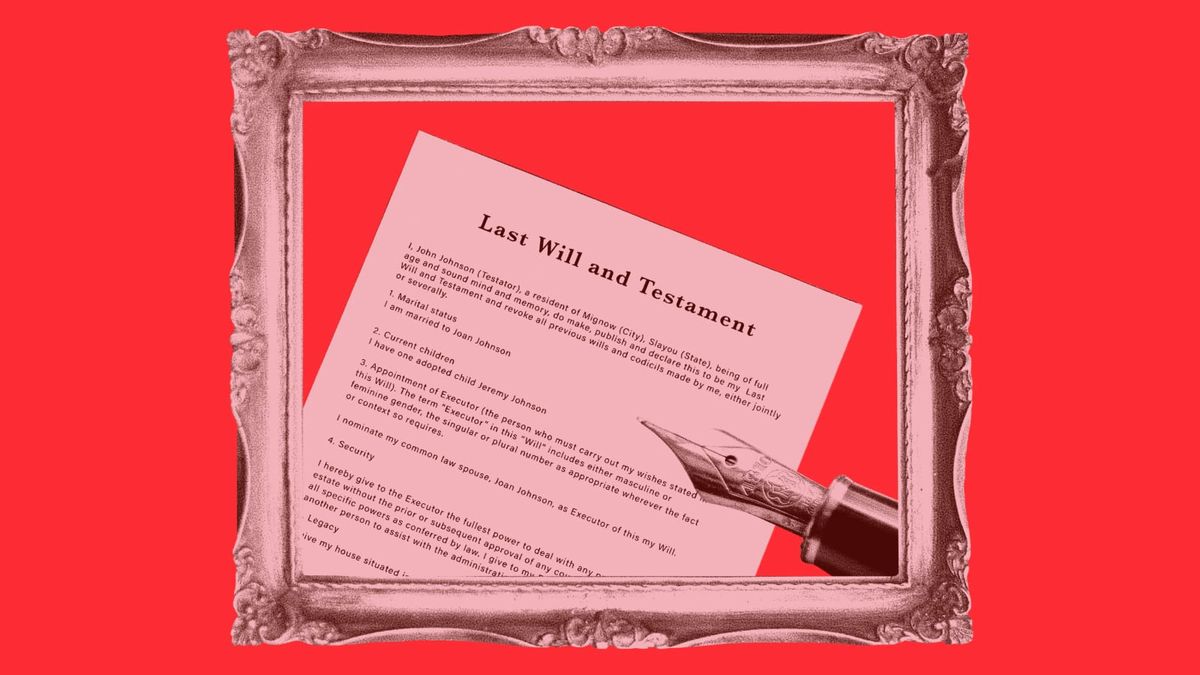
And she wants you to keep any inheritance you might receive separate from your spouse’s finances.
It’s certainly not romantic to consider, but Wagner says the recommendation is rooted in practicality—and essential to each spouse honoring the other’s financial independence. Keeping the inheritance you receive from parents, grandparents, or anyone else protects against nightmare scenarios like hers.
This is an especially important consideration for women, who are expected to inherit the majority of assets being passed down over the next few decades. Broadly speaking, women are still more likely than men to put their own careers on hold when they have children, to abdicate long-term financial planning to their husbands, and to feel less confident and secure in their financial knowledge.
It also ensures that you are honoring your family and the wealth that was created and handed down to you, she says. You can always choose to gift your spouse some of the inheritance, or combine some of the funds in some way, later down the road.
“The key to building healthy relationships, number one, is to honor each other's financial independence and the wealth that they've created or that they have,” says Wagner. “It's the root to me of having equal power, equal transparency, and openness.”
How to keep an inheritance separate
Inherited assets are considered separate by default, even if you are married. But it’s up to you to keep them that way. The easiest way is in a bank account or investment account held only in your own name, or in a trust for your heirs, like your children. You can also make stipulations in a prenuptial, postnuptial, or separation agreement that any inheritances will remain separate property.
Any bit of commingling can complicate things. If funds are deposited into a joint account or a bequest is used to purchase real estate with both spouses on the title, suddenly they can be considered marital assets.
This makes things messy in the case of divorce. You could be left splitting your inheritance with your ex, against the wishes of your benefactor and to the detriment of you and, potentially, your children. (Belle Burden’s best-selling memoir Strangers highlights the pain that can arise.)
“Where I've seen the most mistakes happen is when things just inadvertently happen. Inherited money is used to buy an asset that is going to be jointly used by both folks,” says Wagner. “Things are happening that they don’t realize are affecting the characterization of that asset.”
And while you may think you don’t have to worry about divorce, a large liquidity event like receiving an inheritance has the potential to lead to problems if it’s not addressed appropriately. It can be a little like winning the lottery—what seems like a godsend can quickly devolve. Money, and especially something extraordinary like an inheritance, can be a trigger in any relationship and the catalyst to bigger issues down the road.
Another reason to keep inherited assets separate: your own estate planning goals. If you die before your spouse, your inherited assets are held jointly, and without the right legal documents in place, you won’t have post-mortem control over how that money is distributed. Instead, you can set up a trust for your children (or any intended beneficiaries) funded with your inheritance, and you’ll be able to sleep easy knowing they will have a cushion no matter what happens.
Wagner says to be open with your spouse about the inheritance and what you might receive, as well as why you plan to keep it separate—trying to hide anything builds distrust. And don’t make assumptions about your spouse’s reaction or goals. Instead, open up a dialog about their plans for the future as well as your own.
Depending on the amount you are receiving, you may want to have the conversation with a marriage therapist who can help you both navigate the complex feelings that arise. Try to convey to your partner how the wealth was created, and why it is important to you to keep it within your family.
“I don't think there’s enough communication either—openly, proactively—because money is typically a very taboo topic,” Wagner says. “All of a sudden, there’s an infusion of an inherited asset, and there feels like this potential lack of or inconsistency of power. It can be so hurtful to the dynamics of a partnership.”
Be familiar with your basic financials
Receiving an inheritance is a big responsibility. In order to be a good steward of any inherited assets, you need to have a handle on the money you already have.
“Women have to understand their numbers. They absolutely have to understand the nuances of their wealth,” says Wagner. “They have a personal responsibility to themselves and to the other person to better understand what this new wealth means and the laws and and how to protect it.”
That includes not just what you own—in cash, stocks, retirement accounts, life insurance policies, real estate, cars, and so on—and what you owe, but the intricacies as well. Do you have liquidity issues? Do you have enough in an emergency fund to cover your families’ expenses for six months? What types of investments do you have? What are the tax treatments on those investments? Are you and your spouse living a life you can actually afford?
Once you understand those nuances, “it’s all about education,” says Wagner. Learn how your money is growing and the true power of compounding.
“Most people, not just women, don’t understand the power of compounding, and the fact that money can double every 10 years at 7% [returns] if you actually don’t touch it, and you save with consistency, and you let it grow,” she says.
Once you have that financial literacy, you can incorporate it into your everyday life—and be confident that you will be able to handle any inheritance that comes your way.
“You’ve got to make sure that you have a strong financial foundation so when a liquidity event happens, like an inheritance, you understand the lingo, and you understand how this may impact your current financial situation, or how it may not,” she says.
More on The Great Wealth Transfer
 Alicia Adamczyk
 Alicia Adamczyk
 Alicia Adamczyk