

We have a lot of new subscribers today! Welcome! In our Friday newsletters, we wax poetic on all kinds of topics related to business, money, macro- and microeconomics, and so much more. You can read past issues here. If you’re just here for Home Economics, check out the full archive here! (And a reminder you can pick and choose which Purse newsletters you’re subscribed to on your profile page!)

If you haven’t heard, the world is ending. On that all of the people currently getting fabulously wealthy off of artificial intelligence seem to agree.
There’s a greater than 10% chance AI brings about the end of humanity by 2035, says one AI researcher. Another gives us just until 2030. And 1,300 computer scientists say the industry needs to slow down development, and that governments around the world need to speed up oversight, “to avoid catastrophic harms.”
Because I’m an optimist at heart, I’m going to go ahead and take the over. I think humanity will still be around in four years. (You heard it here first!) But the many proclamations—and the breathless media coverage of them—do make you start to wonder: All of these very smart people believe the technology they have devoted their lives to has a non-zero chance of ending humanity, imminently. At best, they hope to overturn the economy and disrupt the lives of millions of people. What are we doing?
Thinking about the rise of AI and whatever the hell it’s doing to the way we work, our broader economy, and our sense of self has started preoccupying ever more of the time I wish I could devote to literally anything else. I’m sure many of you feel similarly. I go about my day, doing my job and dutifully siphoning a small portion of my earnings away into a retirement account that I can’t touch for 20-plus more years. I’m then bombarded with 15 new headlines about the end of white-collar work, the coming market crash to end all market crashes, or the end of humanity.
 Alicia Adamczyk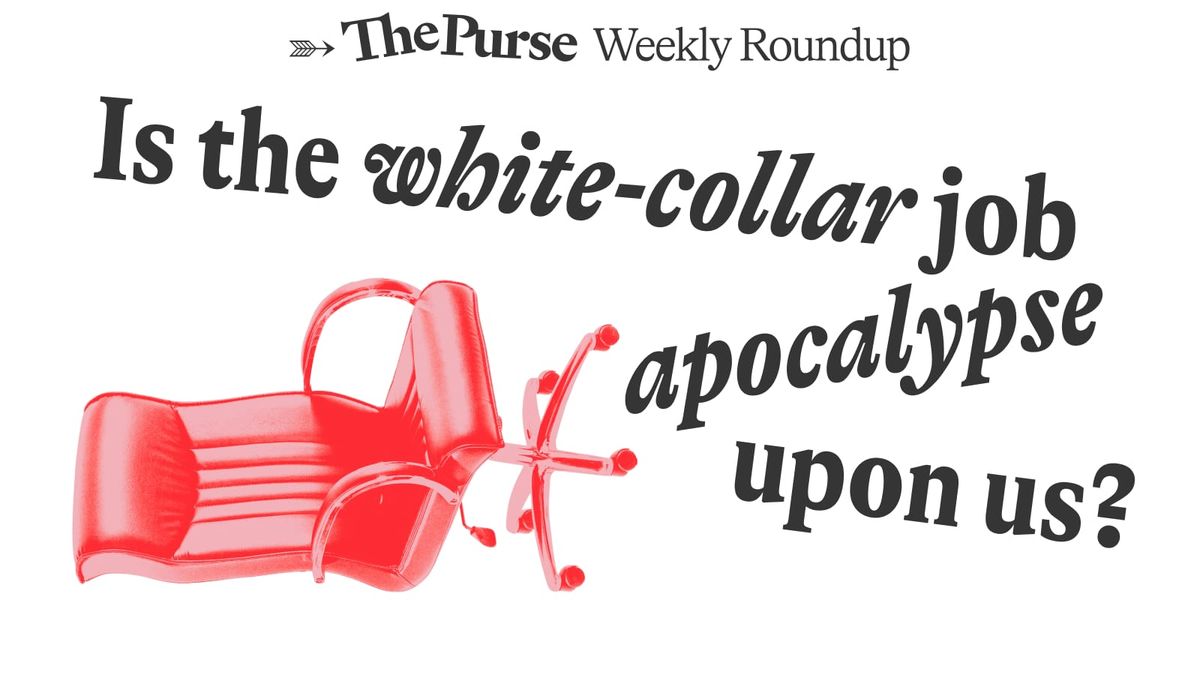
What else is there to do but shut my laptop and cook dinner, watch the new popular show on Netflix, and fret about not exercising enough. To say that a healthy dose of cognitive dissonance is required to keep on trucking day to day is perhaps an understatement. (Don’t worry—I frequently close out the night with an existential spiral about what the future holds.)
At the same time, it is remarkably difficult to discern whether anything these companies say is happening is, in fact, happening. It doesn’t take a conspiracy theorist to find it strange that so many AI leaders—Dario Amodei, Sam Altman, Elon Musk, and Bill Gates, to name a few—are calling for a global slowdown of AI development all at once, after pushing for no restrictions or interventions for so long.
I have to believe AI will not bring about the end of all of us in just a few years’ time. But then I consider the ramifications of AI-induced biological warfare and bank breaches and widespread cyberattacks. I feel a little less confident.
So, how do we reckon with all of that and keep going?
This has been a tension in writing about money and saving money and investing money for my entire career (and likely for as long as humans have been telling other humans to save a little bit for the future). It feels extremely silly to care about your 401(k) or your credit score or paying off debt when the richest men in the history of the world are trying to make your job obsolete—and maybe destroying humanity in the process.
Before all of this AI angst, climate change was the big reason many young people I spoke to felt it was pointless to save for the future. Those worries are still there, of course. Just exacerbated by a technology that is making the climate crisis even worse.
My perspective hasn’t changed. It is unlikely that any of us will ever save too much money. And you can still spend now to enjoy your life in the present, while putting aside at least a little bit for the future you. I deeply understand the nihilism about the current state of the world and the economy, but I don’t find it particularly useful, especially when you are only hurting yourself by not saving more. After all, we could be in the midst of the Battle of Armageddon, and the IRS would still come calling for your quarterly tax payment.
And what is saving for the future if not a vote of confidence that things will change for the better? Or at least that you believe that they will?
If that’s too Pollyanna-ish for you, let’s take the nihilism on its face. Weather events will be more extreme, AI may lead to widespread job loss, and our political leaders will continue to leave us to fend for ourselves. From that perspective, it is unlikely you will be better off having less money set aside. Having savings may save your life.
Does that mean you should be obsessing over your savings rate or putting off experiencing everything life has to offer now? Of course not. I told a friend recently that my goal for the foreseeable future is to simply have more fun. Why shouldn’t I?
 Alicia Adamczyk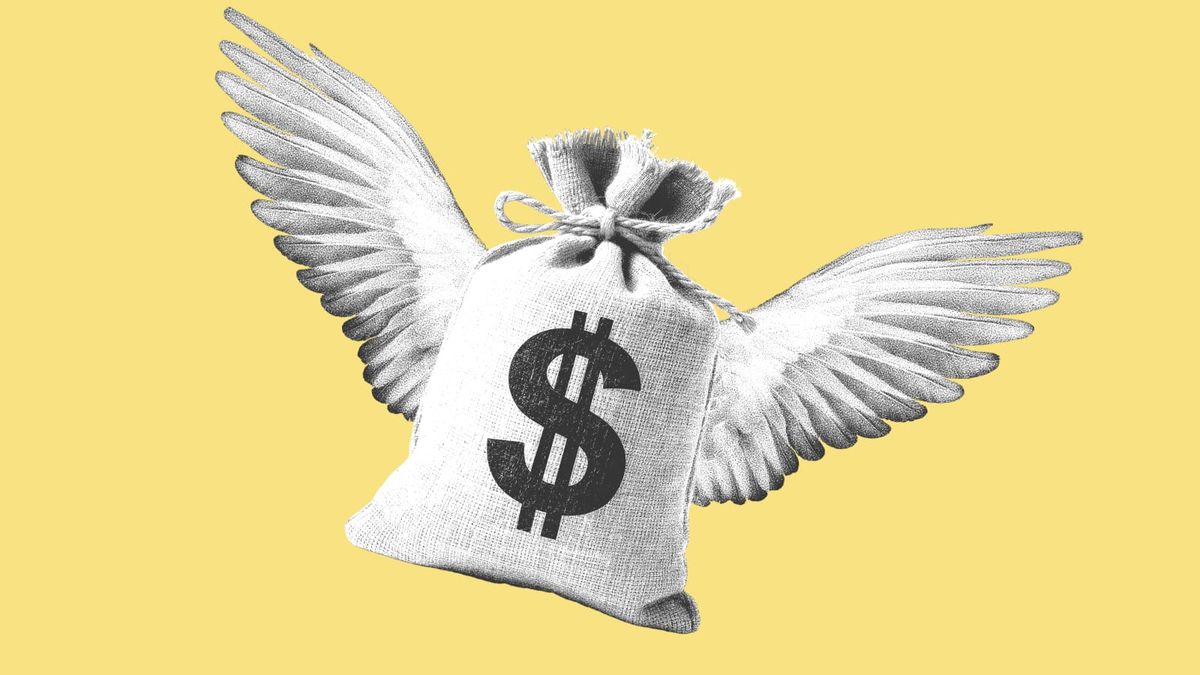
As I was thinking about the cognitive dissonance it takes to care about our finances when we’re told the world is going to end, I came across an old episode of the Money with Katie podcast, “How to Use Today’s Economic Uncertainty to Get Closer to Your Dream Life.” In it, host Katie Gatti Tassin interviews financial expert Amanda Holden, AKA Dumpster Doggy, about economic uncertainty and saving for the end of the world.
“We are worried about this possible potential financial calamity,” Holden said. “Yet really the only thing that guarantees calamity is doing nothing at all. If you choose to do nothing out of fear, you will self-fulfill your greatest fear of having nothing.”
The past six years have been a whirlwind. We’ve survived a global pandemic, sky-high inflation, multiple once-in-a-generation natural disasters, and widespread political unrest. Now, we are facing wars and the unknowability of AI.
At the same time, the stock market continues to climb, consumers keep on spending, and we all go about our lives, going into work and cooking dinner and watching Netflix. A market correction will happen at some point, as will a recession. But there’s no telling when, or how bad it will shake out to be. Still, that doesn’t mean you shouldn’t invest. Even a 20% drop in the S&P 500 would bring it back to where it was in June of last year. Perspective is important.
“Just remember that a lot of really scary stuff has happened over history and the markets still rip,” Holden told Katie.
Why keep saving and investing for an unknowable future? If nothing else, it’s one less thing to worry about.
-Alicia
The Purse September sale
We’re offering 10% off annual subscriptions through the month of September. You must follow this link to take advantage of the offer! (If you thought you were getting the sale price but didn’t, please reach out and we’ll try to fix it!)
And don’t miss your chance to get your own Purse sweatshirt! If you’d like one, please fill out this form with your email, size (they are unisex), and mailing address. The price will depend on how many orders we receive, but we estimate they will cost ~$50 each with shipping. We’ll reach out by email to get payment before they ship. Get your order in by September 25, 2026. You can see what they look like in this photo.
What else we’re reading (and watching and listening to)
- Lena Dunham shared that she had a baby via surrogate, and I loved her reflection on the 10 records she wants to introduce her daughter to first. “Without the aid of streaming, I had to get real about what I actually love and what actually formed me. I was thinking about a person hearing music for the first time(!) and what I wanted her to understand about the world through it,” she wrote. It has me thinking about what I would choose! -Alicia
- My husband Ken’s band, Be Decent, released their debut record today! I know I’m terribly biased, but I’m also a tough critic, and I’m not lying when I say there are no skips! You can listen wherever you stream music or buy a vinyl copy. (And if you’re in Brooklyn, they’re playing a record-release show on Saturday, September 26, at Wild East Brewing. It’s free!) -Lindsey
- I’m not big on productivity hacks, but I really like the ones outlined by author Leigh Stein in this essay, and I may just try to adopt some of hers—especially tracking excuses! -Alicia
- It feels like my civic duty to share the Jimmy Kimmel-James Talarico interview on YouTube that the FCC wouldn’t let ABC air. We should all be very concerned about how this administration is working to restrict our freedom of speech. Just a reminder, there’s still time to register to vote ahead of this year’s midterm elections. -Lindsey
- My fascination with how work is changing continues, and in The New York Times, I explored the sentiment I’ve been seeing among some people who have started thinking of freelancing/contract work/entrepreneurship a “safer” bet than working for a large company right now. The economist Kathryn Anne Edwards told me the U.S. has a “quality jobs crisis,” and I’ve been obsessing over that ever since (which loyal readers here are probably aware of and a little sick of hearing about, lol). What makes a “quality” job, and where can you find one in 2026? Shoutout to The Purse readers who chatted with me about their experiences for this story! -Alicia
On our radar
- Big congrats to friend of The Purse L’Oreal Thompson Payton on her new children’s book, Violet Goes Voting! Check out her recent LinkedIn post about her inspiration for the book. I’ve been taking Freddy to the polls every time I vote since he was a tiny baby! -Lindsey
- I’m still looking for a couple of teachers to talk to (anonymously) about their out-of-pocket expenses for the start of the school year for a story for Yahoo. If you’re interested, reach out to alicia@thepurse.co! -Alicia
Comment of the week
“I really relate to the HCOL area issues, and find that it’s hard for people to relate when they haven’t experienced it. We also lease, because it’s part of our budget and we don’t like spending money on the maintenance that older cars require. I don’t think you need to worry about that part of the equation if it’s something you value. I would add to your emergency fund, though I understand that you’ve had an expensive few years. My husband and I also had very little in our fund until recently, but have been steadily building over the last year or so.”
-IsabelW on “Home Economics No. 60: Married, 37, and living on Long Island with an $8k mortgage”
TikTok of the week
@aliciatalksmoney September 13, 2026: My story in The New York Times about our changing perceptions around job security! #economy #career #jobs
♬ original sound - Alicia Adamczyk
What else we published on The Purse this week
We had a light publishing week due to our planning retreat, but we did publish a super interesting (if we say so ourselves) Home Economics that is dredging up a lot of feelings for readers!
We’ve limited the comments to subscribers only (free or paid), but check those out, too, for some respectful advice and discussion on how big an emergency fund really needs to be.
 Lindsey Stanberry
Best money we spent this week
- I bought two pairs of looser yoga pants on Poshmark this week, and I’m really happy with both! I also sold a dress, so it’s like I got them half off! (~$40 for both) -Alicia
- Alicia and I spent the first part of the week in Cape Cod on the first-annual Purse retreat. We ate a lot of good food, but I especially enjoyed the dinner we had at Asti, a local Mediterranean restaurant. ($115) -Lindsey
Coming up next week on The Purse: A Berlin travel guide for paid subscribers, tips for improving your credit score, our personal finance principles, and the launch of something fun. Subscribe so you don’t miss anything!


