

Over the past few years, it’s become increasingly clear that we are experiencing a dramatic shift in white-collar employment: The quality of jobs offered by corporate America is quickly declining.
I’m not talking about the desire we might feel to find meaning in our work. “Bullshit” jobs have long existed (see Herman Melville’s Bartleby, the Scrivener) and will continue to. Rather, I mean the quality of a job based on wages, access to benefits, security, physical safety, and opportunities for advancement. These days white collar workers are seeing lower pay, ever-increasing workloads, few opportunities to progress, and little hope of stability. And it’s making us miserable.
Thanks to the slow and steady degradation of worker rights, employees are working longer hours for lower pay, and employers are continuously blurring the line between home and work life. Middle management is being hollowed out, and entry-level roles are being eliminated. Mentorship and on-the-job training are a thing of the past. Constant corporate consolidation means workers have fewer options for who to work for.
The desire for stability seems quaint. When even the most profitable firms are routinely laying off staff to juice the numbers on their quarterly reports and the president lets a random businessman eliminate almost half a million federal jobs (once considered the most stable in the country), it’s no wonder worker satisfaction and trust is at a low point.
Anecdotally, I don’t know anyone who believes if they work hard they will be rewarded. Instead, even if they have a full-time role, they’re always worried about the next round of layoffs around the corner. Only 22% of workers strongly say that their job is safe from being eliminated, according to a recent survey of over 39,000 workers globally from payroll and human resources services provider ADP.
And now, more firms are rolling back the benefits that made these jobs compelling to begin with, including parental leave, healthcare, and retirement plans. One company recently said it was ceasing contributions to its employees’ 401(k)s to invest the money in AI, instead.
Our era is defined by deferring to employers and owners at every stage, the economist Kathryn Anne Edwards told me in a recent interview. And this is to the detriment of workers. There is little dignity left in corporate work.
“How many times have we cut corporate taxes over the last 25 years versus raise the minimum wage?” Edwards says. “Everybody’s going to suffer from that in some way. Some workers will be more insulated because they have education and income, some will be less.”
Of course, it’s not just white collar work that’s been affected—the steady loss of manufacturing jobs, a decline in union power, and globalization hit blue collar work long ago. Lately, though, haphazard scheduling is just one way that hourly work has been degraded further, according to Edwards.
“In retail, trade, and leisure and hospitality, you have just absolutely miserable shifts that are designed by a computer algorithm,” she says. “[They] don’t think that workers are humans, so they don’t treat them as such.”
AI adds to the quality crisis
AI seems to be supercharging this crisis, but not necessarily because it’s leading to an overall decline in jobs. In fact, the research we have so far suggests there isn’t much AI-related job loss, though Bill Gates, at least, is worried that will soon change.
Instead, many people I’ve spoken to about their work say the decline is in the quality of the tasks they have to do each day, leading to ever more drudgery. Workers are forced to use AI tools for virtually every task, and they’re spending even more time verifying and cleaning up its shoddy work.
“Instead of allowing for greater focus, the latest AI tools are overwhelming workers, frazzling minds and shredding attention spans,” The Atlantic reported.
Similarly, a recent survey from Boston Consulting Group found that many workers are experiencing “mental fatigue from excessive use or oversight of AI tools beyond one’s cognitive capacity.” The Harvard Business Review calls it “workslop.”
And when the job market is as bad as it is, workers don’t want to risk losing theirs by pushing back.
Eventually, our jobs could become babysitting the robots doing the actual work, making them “more intense, lonely and less creative,” writes Bloomberg’s Parmy Olson.
“The tech CEOs may have stopped predicting the death of jobs,” Olson writes, “but no one is asking whether the jobs that survive will still be worth doing.”
-Alicia
Don’t miss:
 Alicia Adamczyk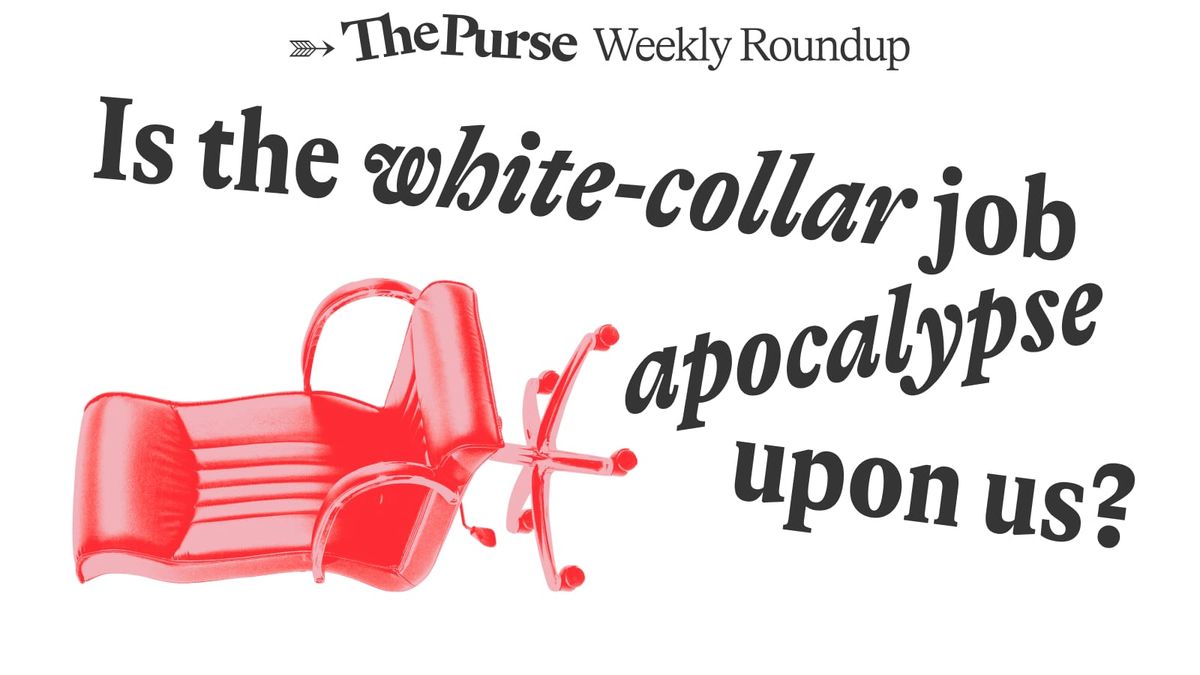
 Alicia Adamczyk
What else we’re reading (and watching and listening to) this week
- RIP Dolly Parton. There have been so many lovely tributes to the Queen of Country Music, who died Tuesday at age 80, but I especially liked this one from poet and cultural critic Hanif Abdurraqib. (Leave it to the poets to really touch a nerve!) “I think a good life is a life where what you’ve given outpaces what you’ve made. I hope when I die, people talk less about my writing, and more about the kind of (hopefully) caring and thoughtful life the writing has allowed for. Dolly Parton was a champion of that idea, that fullness.” -Alicia (and co-signed by Lindsey!)
- I can’t believe we also lost Tim Curry and Yayoi Kusama this week! Our world is a lot less colorful to be sure. My amazing friend Claudine Ko shared her story of trying to get in touch (by fax!) with Kusama in 1999 for Jane’s Gutsiest Women of the Year feature. Kusama’s quote is gold. -Lindsey (who loves to hear all of Claudine’s Jane stories)
- I’m fascinated by Bill Gates’ big warning about AI, which he published on his blog and gave an interview to many big media outlets about this week. “If someone had a credible plan for slowing down AI advances globally, I would likely support it. However, I don’t think that’s going to happen. The geopolitical and economic incentives are pushing too hard to go full speed ahead.” -Alicia
- I kept reading quotes and stats from Caitlin Moscatello’s epic article on youth sports and travel leagues out loud to Ken because each one was crazier than the last. For as intense and competitive as it can be in New York City, I feel lucky that so far we’ve managed to avoid travel sports, and Freddy just gets to enjoy playing for a local, low-stakes rec league. Parents and kids spending 30-plus hours a week and paying tens of thousands to participate in youth sports just feels insane to me. I feel so judgy about it, but I really don’t understand why we can’t push back and just say no. -Lindsey
On our radar
- Friend of The Purse and Ladies Get Paid founder Claire Wasserman is hosting a free 60-minute live training on Thursday, September 10, at 4:00 p.m. ET on why earning more feels harder than it should—and how to change that. During the session, Claire says she’ll “identify the four specific fears that keep women underpaid and walk you through the methodology that addresses them at the root.” You’ll leave with four tools you can use immediately, including a personal trigger protocol you’ll build during the session. This training is the culmination of years of coaching and research in financial psychology and nervous system regulation, plus Claire’s own lived experience of losing everything and having to rebuild. Register here. -Lindsey
- It was so great to meet up with some of our other newsletter friends this week, including Matt Schulz of Ask, Save, Earn, Hanna Horvath of Your Brain on Money, and new friend Phoebe Bain of 1440! -Lindsey and Alicia
Comment of the week
“Both our children are adults now. Every day I feel lucky to have them still want to spend time with their parents, share their ups and downs, and regularly send a text ending with ‘love you.’”
- Suzanne Lovell on Lindsey’s essay, “10 thoughts on a decade of motherhood.”
What else we published on The Purse this week
We want to know!
 Lindsey Stanberry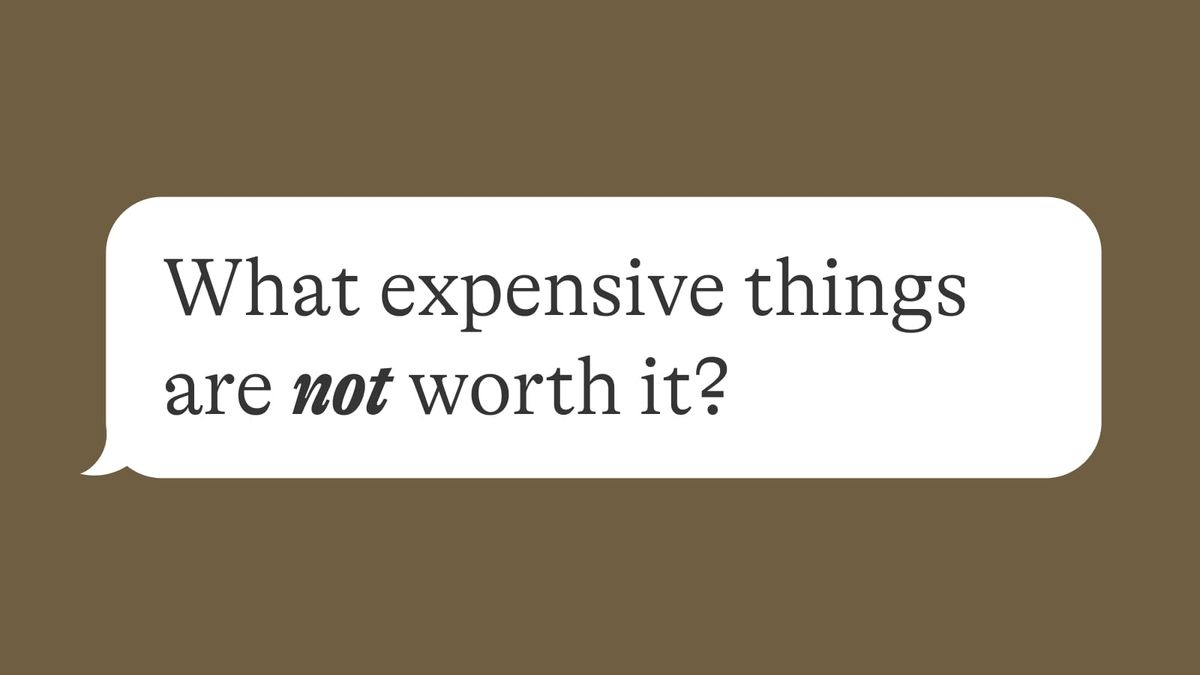
Alicia pulls tips and tricks from our Meal Plan series.
 Alicia Adamczyk
Freddy is turning 10, and Lindsey has feelings about it!
 Lindsey Stanberry
Best money we spent (or saved!) this week
- This week I earned a little extra money from one of my side gigs and put it all directly into savings, split between my emergency fund, a future baby savings account, and our brokerage. It felt really good! -Alicia
- I went on a real journey to cancel my LegalZoom subscription, which was not one click! It involved getting help from my wonderful accountant, going to the bank to get a certified check (and paying a $15 fee for a $30 check!), and mailing a form to New York’s State Department. But in the end, it worked, and I saved $400! I was thrilled. -Lindsey


