

It’s hard to believe it’s been 25 years since the 9/11 terrorist attacks. We can see the Tribute in Light from our apartment, and Ken and I have been reflecting on that horrible day all week. We’re thinking of those who lost their lives and sending so much love to those who lost loved ones.

Over the holiday weekend, there was a lot of buzz about a new Trump administration plan that proposes to pay stay-at-home parents for the work of caring for their kids, up to $9,000 per child.
At first glance, this doesn’t seem like a terrible idea. After all, it takes a lot of work to raise children, and one of the reasons many parents don’t choose to stay home when their kids are young is because they can’t afford to be a single-income household.
It’s also not a new idea. In 2020—when many moms were slowly losing their minds trying to juggle their Zoom careers alongside their children’s Zoom schooling—activist and Girls Who Code CEO Reshma Saujani put forth the idea of the Marshall Plan for Moms, which included a call to send mothers a monthly check of $2,400 to cover the cost of their unpaid labor. A version of the plan was presented by Senators Amy Klobuchar (D-MN) and Tammy Duckworth (D-IL) in the winter of 2021 as a resolution to support U.S. mothers. And some of those policy suggestions made it into a draft of President Biden’s well-intentioned but ill-fated Build Back Better bill.
But if you take a peek under the hood of this new policy—one championed by famous daycare hater Vice President J.D. Vance—you quickly realize it’s a lemon.
For starters, the policy would only apply to married couples. And in order to fund this initiative, it would draw on a very small pool of money that was previously earmarked to help low-income parents—primarily single moms—afford child care.
On Tuesday, friend of The Purse and childcare policy expert Rebecca Gale wrote about the many issues with this proposal in her newsletter, It Doesn’t Have to Be This Hard.
“The problem is that [the proposal is] pulling from an already overstressed, too-small sum of money, and it means fewer people who need childcare support will get it. We need a bigger pie of money going to child care.”
I added the bolded emphasis on her last sentence because I think this is so important. When we hear about these proposals that take money from one deserving group (primarily low-income single moms) in order to give it to another deserving group (primarily low-income stay-at-home moms), it’s easy to feel either angry or thrilled depending on which group you fall into. But while the Trump administration loves to stoke the culture wars, we need to stop falling for the bait.
This policy makes for an attention-grabbing headline that could potentially galvanize the conservative base, which is just as stressed as the rest of America about the cost of, well, everything. While Trump likes to claim that we’re not in the middle of an affordability crisis—just look at the stock market go up, up, up!—pretty much anyone you talk to will give you an earful about the cost of groceries, gas, housing, health care, and, um, child care, etc.
If you’re not inclined to read more than a headline, you might believe that you or your spouse could finally get paid to stay at home with the kids. Let the politicians figure out the details!
But buried deep in the New York Times article about the proposed policy change is a tidbit that I found astonishing: Only 870,000 families are currently benefitting from the existing child care subsidies. In 2025, there were roughly 13 million families with children under the age of six in the U.S. That means less than 7% of families are benefitting from these funds. According to the National Women’s Law Center, only one in seven children who are eligible for this funding actually benefit from it.
Meanwhile, every year Child Care Aware rolls out its child care affordability study, and the numbers are always staggering. The cost of infant care is more expensive than in-state college tuition in 38 states. On average, parents are spending 20% or more of their income on child care costs, well above the 7% affordability benchmark set by the Department of Health and Human Services.
 Alicia Adamczyk
Of course, we know that making child care affordable isn’t a priority of our current administration. Trump told us in April that he is too busy paying for wars to also pay for child care, Medicare, and Medicaid. And indeed, wars are expensive. (We don’t actually know how much the one in Iran costs because the administration hasn’t been forthcoming with that info! But one Harvard economist is “certain” it will cost $1 trillion.)
Still, it’s beginning to feel like politicians can’t continue to ignore the child care affordability crisis—even if our current presidential administration’s overtures are pretty lackluster. And we are seeing some states trying to pick up the slack. But as Rebecca argues in her piece, we simply need the federal government to be spending a lot more money on family-friendly benefits like paid family leave and subsidized child care.
It’s worth pointing out that such an investment would be a huge boon for the economy. In my research for this essay, I kept coming across a study from University of Chicago academics that found the net economic benefits of 12 weeks of federal paid family leave would range from $50 to $200 billion and cost the government just $7 billion.
Of course, we need these benefits to benefit everyone who needs them. We can live in a world where working moms and stay-at-home moms and single moms are supported. Heck, let’s support the dads, too! Everyone wins when there’s affordable child care and paid family leave!
Just a reminder that it is a pretty big election year, and one way to voice support for such initiatives is to vote. (You can register here!) Hopefully, candidates are paying attention to this topic. There is widespread bipartisan support for more federal spending on child care: “74% say funding for child care is an important and good use of tax dollars, including a majority of Republicans, three-quarters of Independents, and nine in 10 Democrats,” according to a January 2026 poll from the First Five Years Fund.
I think most of us can agree that it’s better to spend our tax dollars on babies than on bombs.
-Lindsey
Child care policy in the news
- Some people are calling Vance’s policy change a “trad wife bonus.” UGH! But earlier this summer Atlantic writer Faith Hill wrote about the unglamorous truth of many stay-at-home moms: They stay home because they can’t afford child care.
- Turns out the military used to have a pretty impressive child care program. The Trump administration has gutted that, too.
- In 2023, Rebecca Gale’s New America colleague (and another friend of The Purse!) Katherine Goldstein put together an in-depth playbook with “eight tactics for how policymakers, activists, business leaders, care workers, philanthropists, media, cultural influencers, and care consumers can be a powerful part of a burgeoning ‘care movement.’”
- Before writing this essay, I listened to a recent episode of This Is Uncomfortable all about how Americans are struggling to find affordable child care. It’s an interesting listen with a hopeful ending. Highly recommend.
- Speaking of how local governments are supporting affordable child care initiatives, the Mamdani administration rolled out a free babysitting program last month, and this New York Magazine recap of it is delightful.
- Neha Ruch of The Power Pause is a leading voice changing the perception around stay-at-home mothers. Her LinkedIn post about the administration’s proposal is worth a read.
- I talked with economist Corrine Low on The Family Money podcast about why child care is so expensive these days.
The Purse September sale
We’re offering 10% off annual subscriptions through the month of September. You must follow this link to take advantage of the offer! (If you thought you were taking advantage of the sale and didn’t get the discount, please reach out and we’ll try to fix it!)
And don’t miss your chance to get your own Purse sweatshirt! If you’d like one, please fill out this form with your email, size (they are unisex), and mailing address. The price will depend on how many orders we receive, but we estimate they will cost ~$50 each with shipping. We’ll reach out by email to get payment before they ship. Get your order in by September 25, 2026.
What else we’re reading (and watching and listening to)
- We finished watching Furious on Hulu this week, and it was really fantastic. It was definitely stressful, though—I don’t recommend binge-watching, but rather watching an episode at a time to really take in and sit with everything that is going on. -Alicia
- I have *feelings* about my Instagram feed being filled with ads related to perimenopause symptoms, and so it was with great interest that I read this piece in Wired about the burgeoning perimenopause industrial complex. -Lindsey
- I’ve been a fan of Jami Attenberg for years, and I finally picked up 1,000 Words, the book she wrote tied to her popular #1000WordsofSummer campaigns. It’s chock full of writing advice and inspiration, perfect for getting back to work this fall. -Alicia
- Alicia made me watch the preview of Nathan Fielder’s Elizabeth Holmes documentary, and it was scary! I’m not sure I have the constitution to watch the whole doc! -Lindsey
On our radar
- Friend of The Purse Erin Lowry is hosting another edition of her personal finance comedy show, Funny Money, this Sunday, September 13! This time Erin will be joined by Hanna Horvath and Liz Glazer. New Yorkers can watch the show in-person at Caveat on the Lower East Side, but anyone can livestream or watch it on-demand. Get $10 off in-person tickets with the special code Purse10 or $3 off the livestream with Purse3.
- So many readers were interested in the free month of What Are We Having that we decided to reach out to another newsletter friend to ask for some free trial subscriptions. Rachel Lipson, who writes the fantastic newsletter The Point, all about how to maximize your credit card points, was happy to oblige. Any Purse reader can get a free month of The Point with this link!
Comment of the week
“I automate my finances so that as soon as my paycheck (post 401(k) contributions) hits my checking account, it gets dispersed to a HYSA, ROTH IRA, and brokerage account. Anything leftover stays in [my] checking account and is my allocated spending money for the month (for both fixed and variable expenses).
To decide what amounts went where, I considered both my long-term goals and my day to day ‘quality of life.’ (i.e., I want to save for early retirement, but want to enjoy the journey there!)
Retiring early is a big goal of mine, so I decided on my 401(k), ROTH IRA, and brokerage account contributions based on what I need to “coast” by the time I’m in my mid-thirties.”
-Ash on “How do you budget?”
TikTok of the week
@aliciatalksmoney September 10, 2026: There’s a record divide between corporate profits and worker pay. #economy #inflation #money
♬ original sound - Alicia Adamczyk
What else we published on The Purse this week
We want to hear the best career advice you ever received. Let us know!
 Lindsey Stanberry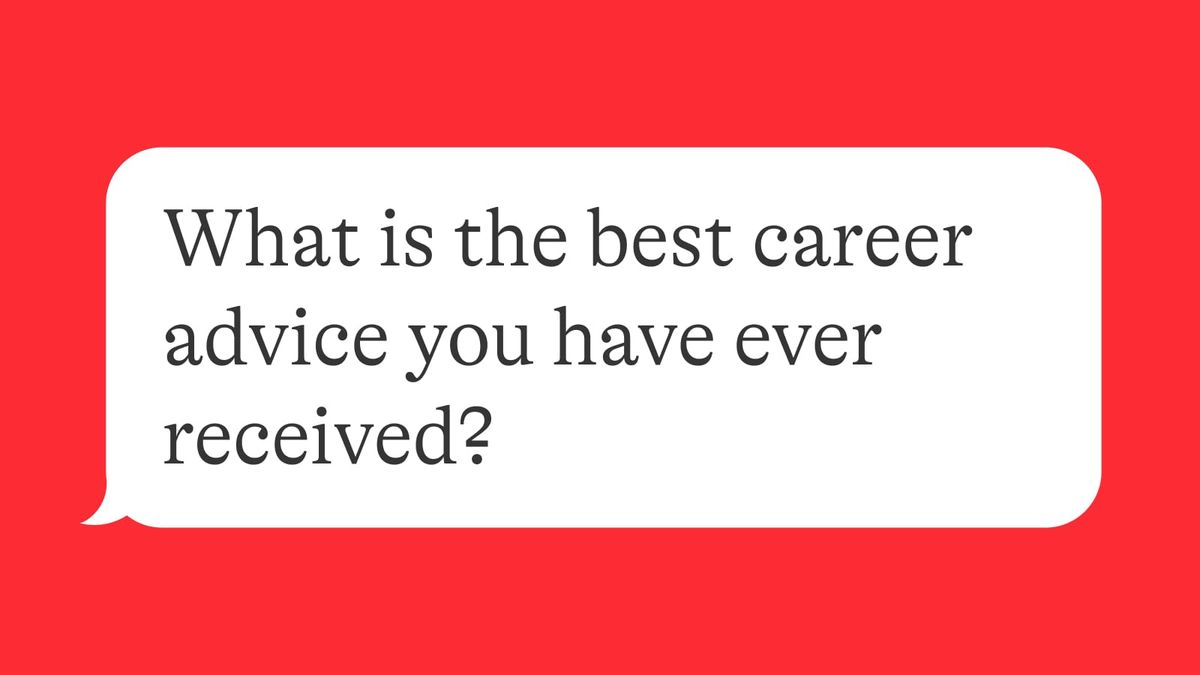
Don’t miss this smart take on a reader question—how do you actually budget? (And chime in in the comments!)
 Alicia Adamczyk
America’s savings rate is less than half of what it was in 2025. What’s yours?
 Alicia Adamczyk
Best money we spent this week
- I do more math than I expected to as a journalist (that’s the curse of writing about money, I suppose, and of being a freelancer and trying to figure out my own taxes), so I finally bought a cute little calculator for my desk. Yes, I could simply keep using my iPhone, but it’s so much more satisfying clickity-clacking on my new pink calculator than it is tapping even more into my phone! -Alicia
- I cleaned out my closet a couple of weeks ago, and in a bit of mania, I decided to snap a photo of (nearly) everything I own and upload it to the Indyx app. I’ve really enjoyed tracking my outfits each day, and while it hasn’t entirely pulled me out of my styling rut, I’m hoping it eventually will. This week, I upgraded to the paid version ($12.99 a month) because I’m low-key obsessed with the “enhancing” function that makes all my crummy photos of my sweaters look professional. -Lindsey


