

We’re excited to have Hanna Horvath back with another guest essay! Before we jump in, a note on next week’s schedule: Money Notes will go out Tuesday (we’ll be talking 2027 401(k) strategies), this month’s paid edition of Home Economics will publish Wednesday, and then we’ll be off on Friday for the holiday. -Alicia

It’s a full week before Black Friday, and retailers are already telling me I’m running out of time. My inbox is full of “early access” sales that are expiring right now and “Black Friday previews” I have to jump on. Somewhere, a countdown clock is informing me that I have 11 minutes to make an essential decision on an air fryer.
I remember when Black Friday was an actual day, one you’d wait for to buy the washer or gaming console or flat-screen TV you’d been eyeing and (hopefully) get a good deal. Now it’s a month-long event, with sales before the sales and members-only deals before the deals for everyone else. And increasingly, I have no idea whether any of them are good.
Earlier this year, I wrote about why everything feels like a scam and how we’re paying more for worse stuff. But the approach of Black Friday has me thinking about a related problem: How are we supposed to make good financial decisions when we can no longer trust the information we’re using to make them?
It’s getting harder and harder to use price as a litmus test for a deal, or even whether something is good quality. Let’s say I found a sweater online that was $150, and now it’s $75. Great! Except, was it ever really $150? Did anyone buy it for that? Or was $150 just a number some marketing manager made up to convince me that I’m somehow saving money when I spend $75?
Last year, Consumers’ Checkbook tracked prices at 25 major retail chains over six months; at 21 of the 25, the items researchers followed were advertised at sale prices more than half the time. At some stores, things were seemingly always on sale.
So what even is a normal price anymore?
Our brains aren’t particularly good at evaluating prices in isolation. We rely on reference points: what something used to cost, what someone else charges for it, what we think seems reasonable. The entire psychology behind sales depends on having some idea of what a product is worth. But when the original price is imaginary, that reference point becomes useless.
And now even the price you see might not be the price someone else sees. The Federal Trade Commission has documented how the surveillance-pricing industry uses information like browsing behavior and location to tailor what consumers are served. That doesn’t mean every retailer is doing this. (Though Instacart got caught testing something close to that last year.) But it does mean companies have increasingly sophisticated ways of charging us the maximum amount we’re willing to pay.
Then there are the tools we used to rely on to figure out whether a product is worth buying in the first place.
Let’s say you need a new vacuum. You Google “best vacuums” and get a wall of sponsored results and affiliate-linked listicles. You find a glowing TikTok review, but the creator was paid to post it. The Amazon reviews look promising, except some might be fake. You find a 40% discount, but now you’re wondering whether the original price was real. Congratulations, you’ve just spent an hour investigating an appliance.
Buying just about anything on the internet has somehow become a part-time job.
Economists call this information asymmetry: One side of a transaction knows much more than the other. This has existed for a while, but not to this level. There is something quite absurd to me about living in an age of near-infinite information and feeling less equipped than ever to make a purchase.
It also changes what it means to be a “smart” consumer, which increasingly means being a suspicious one. Beyond asking, “Do I need this? Can I afford it?” we’re also asking, “Am I the idiot paying full price? Is this review real? Am I being manipulated?”
And all that suspicion costs us. Maybe spending 45 minutes comparing prices saves you $12, and maybe it doesn’t. Either way, you’ve just performed a ton of unpaid labor to buy something you probably didn’t want to think about for more than five minutes.
I’m a financial planner. I believe in comparing prices, reading the fine print, and making smart, intentional decisions with your money. But there’s a limit to how much vigilance we should expect from people just trying to live their lives. And that suspicion follows us into financial advice, the news, and the institutions we’re supposed to rely on. If everyone is selling you something, who’s left to believe?
Trust is part of what makes a market work. We need to be able to assume that a price roughly means one thing and that a review came from a person who actually used the thing. When those assumptions break down, every transaction feels like a negotiation with someone who has more information than you.
I’m tired of having to win a battle against an algorithm every time I buy groceries. I just want to buy groceries.
-Hanna Horvath
What else we’re reading (and watching and listening to)
- “The New Age of Reading” in The New Yorker is a wonderful profile of James Daunt, the man behind Barnes & Noble’s unlikely revival, and the changing culture of reading. He talks about the rise of BookTok and how bookstores are becoming cultural destinations again. It was a surprisingly optimistic read about the future of books, and, as a book lover, made me feel hopeful. -Hanna
- On the flight to Mexico City, I finally watched Materialists, the 2025 romance about a matchmaker (Dakota Johnson) trying to choose between a rich hot guy (Pedro Pascal) and a poor hot guy (Chris Evans). When it came out, so many friends recommended it, telling me the plot was all about love and money, and they weren’t kidding! I loved the ongoing themes of feeling valued and of how our wealth (or lack thereof) impacts our romantic relationships. -Lindsey
- Lindsey and Hanna celebrated their birthdays this past week, and Hanna wrote a great post about 30 things she’s learned about money at age 30. -Alicia (Happy birthday, fellow Scorpio! -Lindsey)
- In The Atlantic article “ChatGPT Analyzed 32,245 of My Text Messages,” writer Anna Holmes uploaded all of her text messages with a close friend to ChatGPT and asked it to take stock of their relationship. A striking essay about friendship, how we understand ourselves, and whether a chatbot can actually tell us something meaningful about our relationships. -Hanna
- Friend of The Purse Amy Colleen passed along this really lovely essay about wealth and motherhood and the overwhelming message society sends that the best moms are rich moms. -Lindsey
- Inspired by last week’s Weekly Roundup on the Jensen Huang saga, I made a TikTok about what I’m calling the Boomer succession problem, which I argue exists not just in corporate America but also in politics and across small businesses. People in the comments have a lot of feelings about it! -Alicia

The Purse classifieds
Not sure where to turn for financial advice? Lenet Rivas, CFP®, can help with problems of all sizes, from planning for the future to rolling over your old 401(k). Click here to learn more about Blue Otter Financial Planning, a female-founded, flat-fee financial planning company and schedule your one-on-one session with Lenet.
Our classified ads are booked up through the new year, but if you’re interested in partnering with The Purse in other ways, reach out to partnerships@thepurse.co for more info.

On our radar
- The Purse is looking for some part-time help filming, editing, and posting social video. We don’t have a huge budget (yet!), but we are offering payment for around 10 hours a week of work. This is a great fit for a college student or new grad, ideally based in New York City. If you’re interested, please reach out to Lindsey at lindsey@thepurse.co for more details.
- Barbara Ginty, OG friend of The Purse and host of the Future Rich podcast, has made it to the quarterfinals of Ryan Seacrest’s national Top Host competition! She’s been hosting her wonderful podcast for eight years! And if she wins, she plans to donate the $25,000 prize to St. Jude’s. Vote for her here! (The last day to vote is November 26.) -Lindsey
- I was recently interviewed by The Guardian about why some white-collar workers are walking away from their careers as AI reshapes the workforce. We spend a lot of time talking about whether AI will replace jobs, but I think we're overlooking how AI is fundamentally changing people's relationship with work. I talked a little about my own decision to leave corporate work and why I think we're going to see a lot more people rethinking what a stable, worthwhile career actually looks like. -Hanna
- It was great seeing some of my favorite money reporters at a FICO holiday dinner last night put on by Meredith Klein of Meredith & The Media, including the AP’s Adriana Morga, the WSJ’s Oyin Adedoyin, and The Cutting Room Floor’s Chris Taylor. -Alicia
- I also made a video for NerdWallet about why you can't leave the house without spending $100. We've made so much of ordinary social life dependent on consumption that simply participating in the world can get expensive. It's something I write about a lot: the disappearance of free and affordable places to spend time and what that means for our friendships, communities, and financial well-being. -Hanna
Instagram of the week
If your bank’s website went dark, would you be able to access the money you’d need in an emergency? It’s smart to have a financial “go bag” that you can easily access in case of a natural disaster, blackout, or other crisis.
Comment of the week
“I think it’s healthy to understand that most relationships are transactional. Not in a bad way, just in a practical way. As in, ‘what do you want that I can help with?’ That in turn sets you up to return the favor when it’s relevant. We’re a village, after all, and it’s OK to give and take as we move collectively toward our goals. If someone asks something of you, it’s honest and healthy to want to know what they can return to you. Otherwise, resentment!”
-Joy Archer on “How to build a network”
What else we published on The Purse this week
For paid subscribers, this month’s Meal Plan offers plenty of inspiration for simple dishes to make on weeknights when your time—and maybe your patience—is running thin.
 Alicia Adamczyk

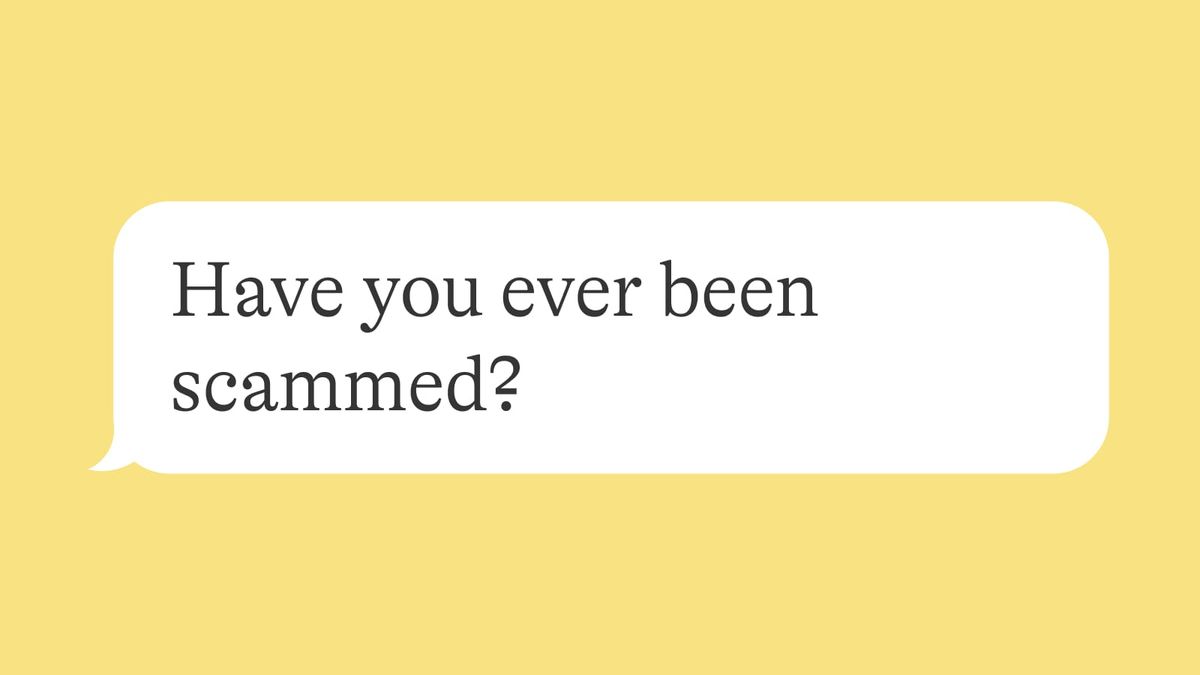
Going along with today’s theme, we are curious: Have you or someone you know ever been scammed?
 Alicia Adamczyk
The Purse partnered with Chase to provide some practical steps you can take to help avoid scams while shopping, traveling, and giving back.
 Lindsey Stanberry
Is it worth investing in women’s networking groups?
 Lindsey Stanberry

Best money we spent this week
- I spent $150 to repair my microwave instead of buying a new one. I’ve been thinking a lot about how much of consumer culture is built around convincing us to replace things, so I felt extremely virtuous about this decision. An expensive way to feel morally superior, perhaps, but still cheaper than an entirely new microwave. -Hanna
- We did a big Costco order and I’ve managed to make all of my meals at home this week, which is a huge coup for me! (~$200) -Alicia
- I’m in Mexico City, and yesterday, we went to Expendio de Maiz on the recommendation of my old friend Julie Bogen. It’s a hole-in-the-wall taco spot with no menu. They just bring you plates of tacos until you say, “No mas.” Everything was delicious, but the dessert was one of the best things I’ve ever eaten. (MX$1,100 or US$57) -Lindsey


