Welcome to our new personal finance–focused newsletter! We will send it out most Tuesdays. You can manage which Purse newsletters you receive here!
Your credit score isn’t the be-all and end-all of your financial health, but having a higher score can help you qualify for better terms on financial products like mortgages, credit cards, and personal loans. With affordability being a top concern for the majority of Americans right now, it pays off, literally, to improve your score.
But given how opaque and confusing America’s credit system is, you may not know exactly how it works—or how to increase your score.
None of us has a single credit score that is used by all lenders at all times. Financial companies calculate your score based on different factors they pull from your credit report. And to make things even more confusing, there are multiple versions of your credit report. Equifax, Experian, and TransUnion are the three largest credit bureaus in the U.S. that put together credit reports for individuals. You can check your credit report for free once a week through AnnualCreditReport.com.
Credit reports, though, don’t include your credit score. One of the most popular scores comes from the Fair Isaac Corp., and it is known as your FICO score. A FICO score ranges from 300 points to 850 points, and the higher the score, the better. A score of 800 and above is considered “exceptional,” and lenders will consider you as the least risky type of prospective borrower.
The average 30-year mortgage rate for someone with a 760 FICO score, for example, is currently 6.66%. For someone with a 660 score, it’s 7.10%, according to The Wall Street Journal. That’s a difference of thousands and thousands of dollars over the life of the loan.
The Purse recently spoke with Jenelle Dito, FICO’s vice president of consumer empowerment programs and partnerships, to get some tips on what she thinks everyone should know about their score.
1. Understand how your credit score works
If you want to improve your credit score, it helps to know how FICO calculates it. Here is the breakdown:
- 35%: payment history. The most important factor is whether you’re making on-time payments to creditors.
- 30%: credit utilization rate. The second most important factor is how much of your available credit you are using at any one time. The less of your available credit you use, the higher your score will be. For example: If you have a $6,000 limit and a $2,000 balance, your utilization rate is 33%.
- 15%: credit history length. The longer you’ve had credit accounts open in your name, the better.
- 10%: how frequently you access new credit. Less is better here.
- 10%: mix of credit accounts. Ideally, you have more than one type of credit product open in your name.
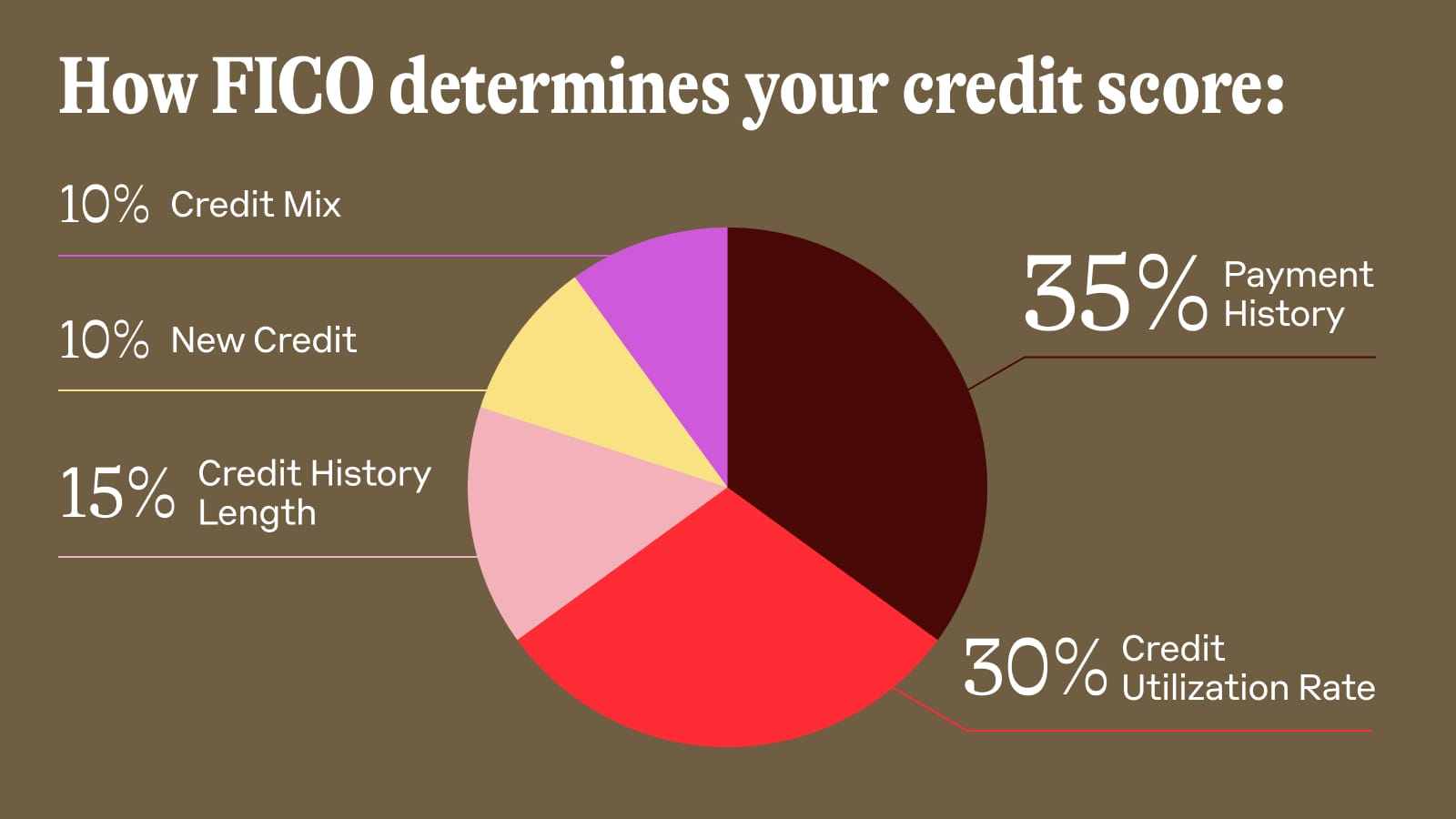
If you want to increase your score, Dito recommends focusing on the two biggest pieces of the pie: paying what you owe on time and keeping your credit utilization rate low. Trying to maximize the other, smaller components may be more trouble than they are worth.
2. Work on your credit score when you do not need to use it
Often people don’t worry about their credit score or report until they are trying to qualify for a financial product, like a mortgage or credit card. But that’s the worst time to try to improve it. It takes months—even years—to actually do so.
The best time to start improving it, then, is now—or anytime when you’re not planning on any major purchases any time soon. One simple way to improve your score is to set up auto-pay on your recurring bills to ensure you’re making them on time each month.
3. Check your credit report regularly
Mistakes creep onto credit reports all of the time, which is why it’s so important to check your credit reports at regular intervals.
“It is really common to have some errors in your credit report and misinformation that takes a little bit of effort to clean up,” says Dito. “I really truly believe in monitoring that consistently, but especially well before a big move.”
Set a calendar reminder at least every six months to pull and review your credit report, so you’ll be able to catch errors as they appear.
4. Keeping a balance does not improve your credit
There is a persistent myth that carrying a balance on a credit card or personal loan improves your credit score. People will point to anecdotal evidence of their score falling after they pay off their student loans or their credit card as proof that you need to be in debt to have a high score.
But that’s not true. It’s always better to have less debt. Maintaining a balance only ensures that you’ll end up paying more and more interest. And in fact, that could hurt your score.
When you pay off an installment loan—like a car loan or student loan—or other debt, the mix of credit you are using may change, resulting in a lower score. But that will likely be a minor and temporary drop—your credit utilization rate will improve in the days and weeks after, and so will your score.
It can seem counterintuitive that doing something positive, like paying off a debt, results in something negative, like a temporarily lower score. But your score will rebound, and you will pay less interest, putting you in a better financial position overall.
“It’s not a debt score. It’s a responsible-use-of-credit score,” says Dito.
5. Paying on time is important, but so is paying what you owe
Making your payments on time has the biggest impact on your credit score. But Dito says there is another component to this: paying as agreed. You need to make at least the minimum monthly payment on your credit card, for example, or the full loan payment on your car or mortgage. Not half payments.
“If you can’t pay as you’ve previously agreed, you should work really hard to change what those agreements are,” she says. “Work with your lender, get an extension, get refinanced down to a smaller amount.”
6. The thickness of your credit report plays a role in your score
As you get older, so does your credit file. When you’re young and have fewer items on your report, making—or missing—a payment will have a far greater impact on your credit score than making an on-time payment on a credit card you’ve had for 20 years.
“If I pay down a credit card, and it gets reported, I may see a small increase in my score, because I have what is called ‘a thick file.’ I have a lot of experience with credit,” says Dito. “That’s a very nice way of saying that I’m older, and I have a large mix of credit.”
7. Checking your score does not hurt it
This is another persistent myth that Dito would like to correct. Checking your score is what’s known as a “soft” inquiry, done for informational or nonlending purposes. Only “hard” inquiries—done by lenders when you apply for a new car loan, credit card, etc.—affect your score, and they generally cause small, temporary dips.
“You always have the right to view your information and to do so for free,” she says.
You can check your score for free through many financial institutions, including American Express, Citi, Discover, and Wells Fargo. You can also go on MyFico.com. And remember, you can check your report weekly for free on AnnualCreditReport.com.
VantageScore is another type of credit score. You can check it for free via companies like Credit.com, Intuit Credit Karma, and WalletHub. Just watch out for upsells on all of these sites, and read the FAQs to see where they are pulling their information from.
8. Improving your score takes time
The credit system works on a predetermined cycle; we are all beholden to the reporting cycles of our lenders.
Credit card companies, for example, typically report new activity once a month. Paying off your card balance one day doesn’t mean that your score will go up the next.
Likewise, there are no quick fixes or hacks to improving your credit. You have to put in the work over a long period of time.
Improving your credit score is about “demonstrated behaviors and healthy activity,” Dito says. And it takes time for all of the good behaviors to compound. “There’s no way around some of that.”
Thank you, Jenelle! Do you have questions about credit? Let us know!
And don’t miss our other personal finance content
For paid subscribers: Lindsey is putting her CFP designation to good use and helping you get your finances in order!
 Lindsey Stanberry
The age old question.
 Alicia Adamczyk
Because one is never enough.
 Alicia Adamczyk