

Our most recent edition of Home Economics featured a family earning over $350,000 annually with less than $8,000 in cash savings. They have some retirement investments, as well as some money stashed in a brokerage account and 529 accounts for their kids. But when it comes to what most people would consider an emergency fund—cash available to withdraw at a moment’s notice from a savings account—they have less than one month’s mortgage payment available.
To say that Purse readers have opinions on this is an understatement. “I cannot stress enough how precarious your financial situation is with so little in emergency savings with such high monthly fixed costs,” wrote one. “Put on your life mask first, mom! The kids will be alright,” wrote another.
The advice is well-intentioned—as one commenter wrote, The Purse community is filled with “anxious personal finance nerds”—but like everything else in life, there’s no correct answer to how much you should have saved in cash on hand.
There are, of course, guidelines. Setting aside three to six months’ worth of expenses stashed is one of the most popular. With that kind of savings, if you lost your job or otherwise had an income interruption, you’d be able to pay for all of your necessary expenses—housing, transportation, utilities, groceries, health care—for an extended period without scrambling to find any job or needing to rely on credit cards.
The family in Home Ec 60 would need roughly $25,425 for their primary mortgage payment alone for three months or $50,850 for six months, never mind the mortgage on their condo or any of their other expenses.
“For a family making $350,000 with two young kids, $8,000 feels pretty thin, especially with high child care and housing costs,” says Joon Um, California-based certified financial planner (CFP). “The goal is simply to have enough cash so an unexpected expense doesn’t force you into debt or selling investments at the wrong time.”
In the past few years, there’s been more talk about the need to have more than six months set aside, since long-term unemployment is on the rise. That’s the risk-averse outlook.
 Alicia Adamczyk
Others don’t see the need to have more than absolutely necessary in liquid savings so that they can invest the rest, whether for retirement or in a brokerage account. Depending on your industry, you may not feel the job market is super risky (nursing and other health-related fields come to mind).
One way to think about your savings account is less about how many months’ of expenses you have currently saved, and more about your household’s flexibility, says Corinna Rose, a California-based CFP.
Ask yourself: How much disposable income do you have? What are your monthly essential expenses? Are there one or two earners? Do you have access to other resources if needed, such as a 0% credit card promo?
“If a dual-income household’s essential expenses are only half of their monthly take-home pay, I’m often comfortable with a smaller cash reserve than the standard advice would suggest,” says Rose. “The household has built-in flexibility that a single-income family may not have.”
Ultimately, it comes down to personal preference. If you feel comfortable having six months of expenses set aside and no more, then that’s great. If you are an anxious personal finance nerd and can only sleep at night if you have 12 months’ worth, then do that.
“I’m conservative. I like 12 to 18 months of living expenses saved for emergencies,” says Catherine Valega, a Massachusetts-based CFP. “I would prioritize emergency savings over the 529 to at least get up to six months.”
 Lindsey Stanberry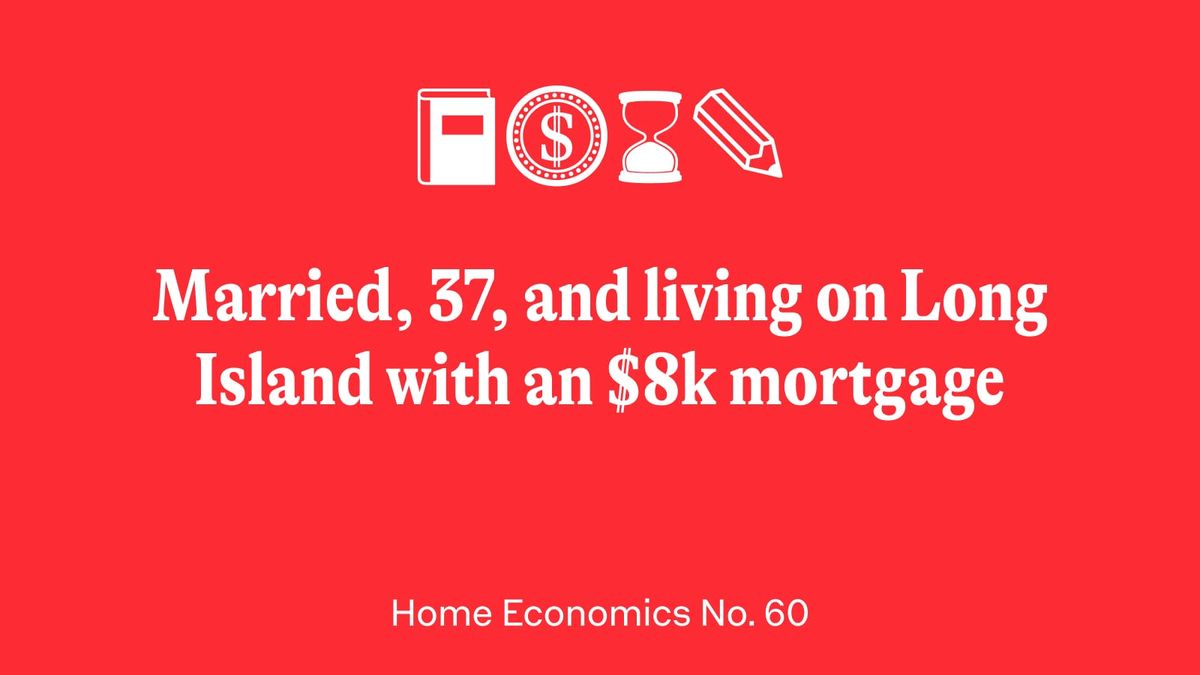
Where to save it
One thing the Home Ec writer got right is that her cash savings is stashed in a high-yield savings account. Many banks, credit unions, and other financial organizations offer high-yield accounts, which can provide 20 times as much interest on your cash than the typical savings account. While the national average savings account interest rate is 0.37%, according to the Federal Deposit Insurance Corporation, or FDIC, high-yield accounts can be as high as 4%.
You do not need to pay a fee for a high-yield account. There are long-time favorites like the online-only account offered by Ally; big bank options like Capital One; and fintech options like Chime.
One thing to watch out for: high-yield “savings” accounts offered by financial institutions—often fintech companies—that are not technically banks. If the company isn’t a chartered bank, it is not protected by FDIC insurance. More on why that matters here. Just know that while they may market a high-yield “cash” account, or similar, it is not the same thing as a savings account and won’t have the same protections.
Tapping investment accounts in a pinch
While it may not be liquid, Home Ec 60 does have money stashed in a brokerage account and in 529 accounts that could be tapped should the money be absolutely needed.
That’s not ideal, of course—but it’s not as bad of a situation as it might look like on its face. Because you’ve already paid taxes on the money you contribute to a brokerage account or a 529 account, there’s no further taxes owed on contributions when you withdraw funds. And contrary to popular belief, you don’t owe a penalty on 529 disbursements that aren’t used for educational expenses.
You will owe taxes on the earnings, but you’d have to pay that anyway if the money was held in a brokerage account. Speaking of brokerage accounts, you may pay the long-term capital gains rate (assuming you made the investments more than a year ago), which is most likely lower than your ordinary income tax rate.
 Alicia Adamczyk
Plenty of people tap their 401(k)s in emergencies, and that’s something to be avoided at all costs—in that case, you’ll pay taxes and likely a 10% early withdrawal penalty. Plus, you are cheating your future self.
Again, in an ideal world you wouldn’t need to sell any investments in an emergency. With a monthly mortgage payment of $8,475 even ~$30,000 in investment accounts won’t last long.
If you don't have the savings, don’t panic. First set a small goal and build from there—even $50 or $100 a month adds up over time. Set up an automatic transfer to your savings account so that you don’t have to think about it.
But as we say at The Purse, you can do anything with your money, but not everything—there simply isn't enough to go around for most people. As long as you can avoid paying penalties, you’re in okay shape.


