

Alicia is out this week, so it’s just me, Lindsey, writing today’s weekly roundup. (That also explains why posting has been a little lighter on the site this week!) We’ll be back to our regularly scheduled fun next week!

Do you consider yourself to be middle class?
It’s a concept I’ve been thinking a lot about this week. I even started to ask my mom-friend group chat. I will often dash off random questions to them when I’m working on a story for The Purse. But I hesitated this time, and I ultimately didn’t hit send. There’s something so triggering about this label—middle class—and somehow it seemed too personal to ask in a text message on a random Thursday afternoon.
I’ve been wanting to write about the middle class for a few weeks, ever since I dropped a link to the controversial New York Times profile of a family of three living on $500,000 on the Upper West Side in a weekly roundup. There was one line in the piece that got the internet talking:
“I think we’re middle class for this area,” said Brendon O’Leary, a data scientist, who was featured in the article. “We’re doing OK.”
There’s no denying the Upper West Side is a wealthy neighborhood—30.7% of households in that zip code earn more than $250,000 a year, according to the NYU Furman Center, and the median income is $155,710, nearly double the U.S. median income of $80,734.
But I felt my anxiety spike when I read that line. If this couple is middle class, where does that leave me? Because I’m making nowhere near that much money.
And then I wondered why I even care. Why do these conversations strike such a nerve?
In response to the Times piece, friend of The Purse Hanna Horvath had a great Instagram reel explaining why these kinds of stories are so controversial. Simply: It comes down to vibes.


“Middle class is not an income bracket,” Hanna said. “It’s an identity. It’s a story you’re telling yourself about the life you thought you’d have.”
Hanna points out that this UWS couple, the Gossai-O’Leary family, is not a member of the “asset class.” They don’t own their home, though they are able to stash away $10,000 a month toward that goal—a fairly significant amount. (FWIW, a family making $80,000 would bring home a monthly paycheck of roughly $6,500—so this couple is able to save more than most Americans earn in a month.) When I shared the offending article in The Purse weekly roundup, one reader left a comment arguing that the Gossai-O’Leary family are middle class because “if you need to work to maintain your lifestyle, you are not a member of the upper class.”
Economists do have an income bracket to define what is middle class. And recently The Wall Street Journal ran a story about how the middle class isn’t shrinking, but, in fact, more Americans are actually breaking into the upper middle class, which is defined as “a family earning between five times and 15 times the poverty guideline.” If we’re following that metric—which, according to these economists, requires an income of between $133,000 and $400,000, depending on where you live—our UWS friends aren’t even considered upper middle class.
In fact, less than 1% of Americans earn that kind of salary, according to U.S. Census data. Interestingly, the World Economic Forum found that most Americans believe that far more of their peers (20%) are earning half a million a year. It’s curious that we think everyone is doing so well financially while we personally feel strapped for cash!
But after years of writing about people and their big feelings about money, I’ve come to understand that it doesn’t really matter what your income is—or how much you have in your savings and retirement accounts—if you don’t feel secure. Still, for the 99% of us who aren’t earning $500k or more a year, it can feel a bit insulting when the 1% claims to feel the squeeze.
I guess I would hope that the Gossai-O’Leary family and others like them would 1) recognize their immense privilege and 2) stop to think that if it’s hard for them, it must be untenable for others who earn far less. At the end of the day, these class titles are irrelevant. And yet, I’d argue this couple should be using some of their money and clout to in an effort to fix some of the structural issues—lack of affordable housing and child care, among others—that impact so many. Be the change they want to see in the world, so to speak.
As Hanna puts forth in her video, those among us who are feeling the squeeze should be fighting back against the billionaires, not fighting amongst ourselves. But I’m not sure we’ll ever get there if the very wealthiest of the so-called middle classers don’t start displaying some self-awareness.
The middle class in the news:
- Trying to navigate all the different headlines about the status of the middle class can give you a headache. It’s a favorite topic of The Wall Street Journal, with their editorial board trying to argue (most of the time) that the middle class is doing just fine.
- Still, the WSJ can’t deny that consumer sentiment dropped precipitously last summer, with the middle class “playing an outsize role in that waning optimism.”
- It often feels like brands don’t really care about the middle class squeeze—they’ve got their eyes on the growing upper middle class. And nowhere is that more apparent than at Disney World.
- While the upper middle class might be expanding in the U.S., “the income share of the bottom 50% has steadily declined since 1980,” economist Kathryn Anne Edwards wrote in Bloomberg in March 2025. It “reached just 13.4% of total income in 2023, the lowest on record apart from the middle years of the Great Depression (1932-1934) and the weak labor market following the Great Recession (2014-2016).” Her solution to fix the problem? Bring back unions.
- While Americans making over $500,000 only account for 1% of the population, the very-rich-but-not-billionaires demo (households worth north of $30 million) is growing rapidly.
- Hanna did an excellent deep dive into the many federal and state policies (including the GI bill providing zero-down-payment home loans and free college education for veterans after World War II) that helped create the middle class we know and lionize.
- “There’s so much whiplash for people who live in proximity to really extreme wealth,” argues friend of The Purse Erin Lowry in her own response reel to the New York Times family. She’s also an Upper West Sider and has first-hand experience with the social dynamics of that neighborhood.
- Maybe I sound like a total brat, but I’d like to add that there are plenty of wonderful neighborhoods within the limits of New York City where this family could live like kings and not feel the same pressure to keep up with their billionaire neighbors.
What else we’ve been reading:
- As I was getting on a plane to Phoenix last week, Alicia dropped a story in our Slack on AI and journalism by Marisa Kabas, who writes the fantastic newsletter The Handbasket. I have so many feelings about this topic, which I may dive into later, but in the meantime, I’ll just say that I agree very deeply with everything Marisa wrote.
- Friends of The Purse Heather and Doug Boneparth put together a super helpful kids-and-money guide in their newsletter The Joint Account. I really liked how they break it down by age group. Lots of good advice here!
- My husband, Ken, not only edits this newsletter, but he also writes his own, all about Latin freestyle. This week, he did a very deep dive into Lisa Lisa and Cult Jam, and it’s such a fun read. At the very least, I recommend playing “Lost In Emotion” as loud as you can! It’s the perfect bop for the crazy hot weather we’ve been having in NYC this week.
What else is on our radar:
- Last week we learned that Bank of New York Mellon and Robinhood will be servicing Trump Accounts, at least for the first year as the program gets off the ground. While much has been made of the $1,000 in seed funding for babies born between 2025 and 2028, millions of additional children under 10 who live in lower-income neighborhoods will also qualify for $250 in funding courtesy of Michael and Susan Dell. Babylist just launched a super helpful tool so you can see if your child qualifies for those funds. Check it out!
- I’m trying to avoid all the press coverage of Lena Dunham’s new book, Famesick, because I want to read all the Girls gossip! Does anyone have a spare copy I can borrow?
What else we published this week:
 Lindsey Stanberry
Lots of good comments here!
Lindsey Stanberry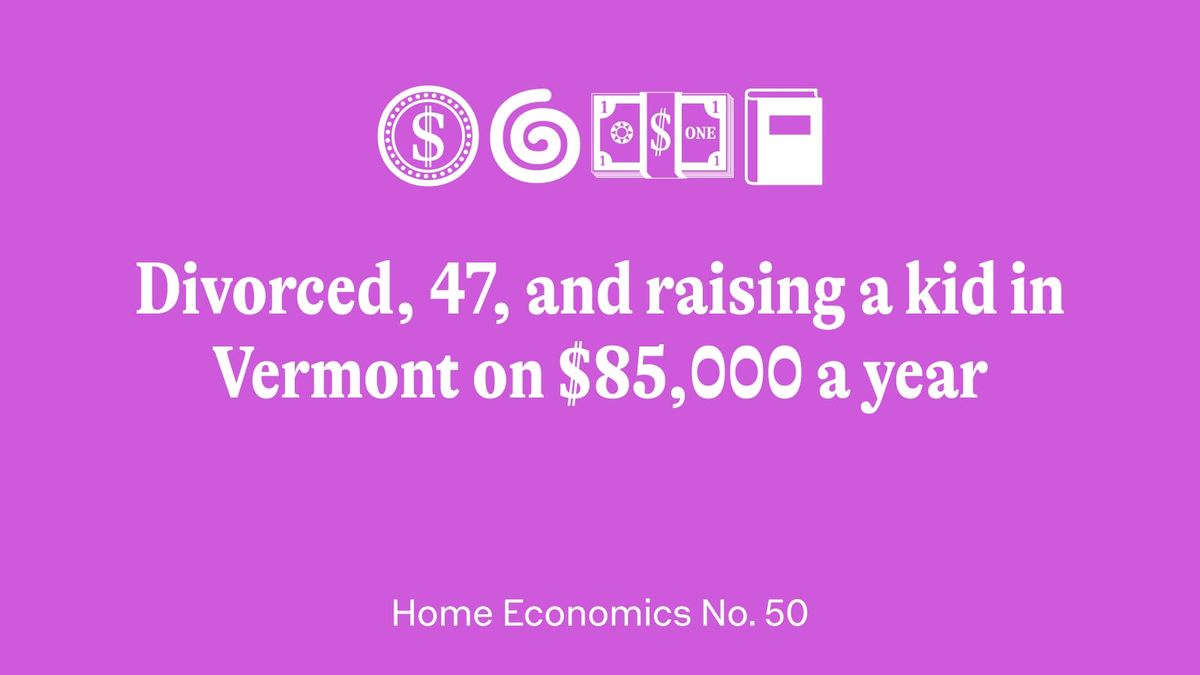
Don’t miss our 50th edition of Home Economics!
Best money I spent this week:
OK, I technically spent this money a few weeks ago, but it just paid off this week. I bought Freddy an underwater disposable camera ($21) to take with us on our Arizona vacation, and he had the very best time taking pictures at the Grand Canyon. We were able to drop off the camera at a local photo store (Accurate Photo—shoutout to my Instagram friends for the rec!), and we got the pictures back a day later. They are SO good and sweet. I completely forgot how fun it is to look through prints like that. I’m a convert!


