


If you’re worried about how much more it’s going to cost to fuel your car, you’re not alone. Gas prices have spiked across the country over the past week and are likely to climb higher due to the ongoing American and Israeli attack on Iran.
After finally dropping below $3 per gallon after a couple years of rising prices, it’s now averaging $3.54 nationally, according to AAA. Of course, there’s great regional variability there, with California and other west coast states seeing much higher average prices than states in the interior of the country.
It always feels a little strange to write about money and trying to cut costs when terrible world events are unfolding, but rising gas prices are a serious financial strain on many Americans. While we still haven’t reached the record highs we saw in 2022 following Russia’s invasion of Ukraine, high fuel costs have been a huge pain point for many households amid the U.S.’s current affordability crisis.
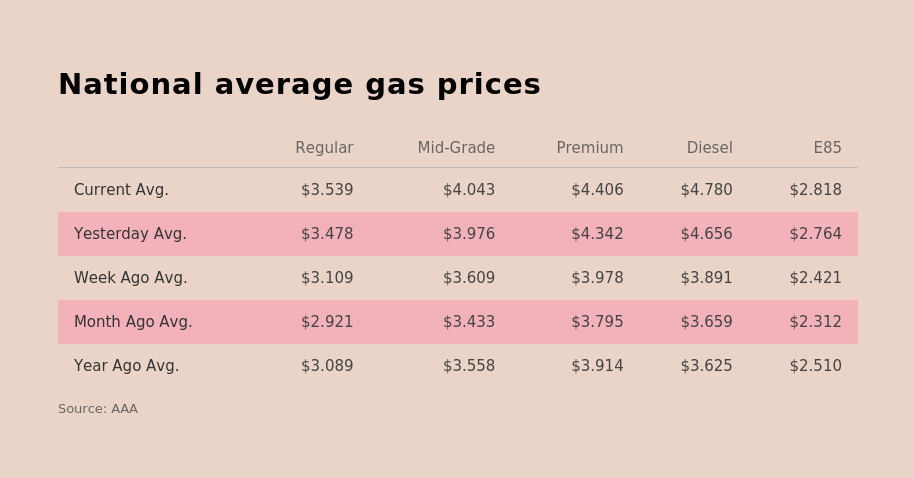
And what’s happening in Iran and the Gulf region doesn’t just affect what you pay at the pump. It will trickle down into other parts of the economy, including impacting energy rates, the cost of airfare, and even fertilizer prices, which means your grocery bill could also rise. Because the attacks have led to closure of one of the world’s major trade routes, prices for pharmaceuticals, batteries, and semiconductors could also be affected.
The current increase in gas prices is also hitting just before summertime in the U.S., when fuel costs typically rise regardless of overseas conflict.
The White House is reportedly considering some solutions, like tapping into Venezuelan oil, instituting a federal tax holiday on gas, or even releasing some of the U.S.’s emergency oil supply, also known as the Strategic Petroleum Reserve.
In the meantime, here are some tips for trimming costs.
Use apps to compare prices
Apps like AAA, GasBuddy, and Waze can help you compare costs at different gas stations.
Use a rewards program
Many gas companies offer their own rewards programs, including: BP’s Earnify, Circle K’s Inner Circle, Exxon Mobil Rewards+, Shell Fuel Rewards, and Speedway’s Speedy Rewards.
And some grocery stores also offer points that you can use for discounts at certain gas stations. For example, at Safeway, you can get up to $1 a gallon off at select gas stations when you spend $100 on groceries.
Pay cash
Many gas stations offer cheaper prices for those who pay in cash instead of using a credit card, to the tune of about 5 to 10 cents per gallon.
That said, check your credit card’s cashback/points systems—it might be more advantageous to put gas on your credit card if you qualify for cashback.
Hack your driving
AAA offers a number of tips for making your driving more fuel efficient, including:
- Avoid “jackrabbit” starts and hard acceleration, which use a lot of fuel.
- Avoid extended idling to warm up the engine, which is unnecessary. (In general you want to avoid idling.)
- Take your foot off the gas early when approaching a red light or stop sign; coasting helps save on fuel.
- Use cruise control to help maintain a constant speed and save fuel.
Do you have any tips for saving on gas?


