


Hello! Before we dive into today’s newsletter, I have two housekeeping notes!
1. We’re hosting our first event of 2026 on Sunday, January 11, in Manhattan. Join us and our friends at Copilot Money for an afternoon of crafting vision boards for an abundant new year! Tickets are $30 and include all materials, as well as drinks and snacks! Register here!
2. This is a shameless shoutout, but I’m still looking for people to share their wellness spending receipts for a story I’m working on with Yahoo! It’s anonymous! You can fill out the form here!
OK! On to today’s very fun edition of What It Cost Me! -Lindsey
When traditional publishers turned down Maxie McCoy’s first novel, she decided to ignore the gatekeepers and go it alone, printing her book the way she wanted to see it in the world and incurring all of the expenses usually footed by a publishing house.
What transpired was riskier, more difficult, and ultimately more fulfilling than she could have imagined.
Maxie’s story is the second installment of What It Cost Me, which explores the true cost of life’s biggest moments, beyond the total on the credit card statement or the dent in your savings account. In case you missed it, our first featured Joy, who quit her lucrative freelancing career to sail the world for two years with her husband.
Maxie is an author, speaker, podcast host, and tireless champion of women’s stories. Below she details the winding road of bringing her first novel into the world, sharing the realities of working a full-time job while drafting and revising, overcoming the urge to quit when the odds seemed stacked against her, and the many disciplined trade-offs that made the novel possible. And of course, what it cost her.
The responses below are lightly edited.
Name: Maxie McCoy
Age: 37
Location: Savannah, Georgia, and San Francisco
Relationship Status: Single
What inspired you to write a novel?
Like many book lovers out there, I often wondered if I could write a novel “one day.” Around the time my first nonfiction book, You’re Not Lost, was published (the same year I met THE Lindsey Stanberry!!!1), I attended HBO’s Women in Comedy Festival, where my best friend had a short film up for an award. Part of the festival programming included workshops on screenwriting.
While I sat in one of those sessions, learning what makes characters work—what makes a movie work—it became clear that these were probably the same things that would make a novel work. With that realization, “one day” turned into “let’s do this.”
I sputtered through three different novels, never really getting anywhere, until I stumbled on the story of Juliette “Daisy” Gordon Low, the founder of the Girl Scouts, during a trip to Savannah, Georgia. While there, I learned about this completely dramatic, wildly inspiring (and very relatable) period of Daisy’s life before she founded the Girl Scouts. She was a middle-aged woman who didn’t know what she was doing with her life. A woman who experienced immense heartbreak (and courage). A woman who was not the obvious choice to create the largest global organization for women and girls—and yet she did. At 51.
A full-body knowing came over me, the way ideas do when they drop into your world: This is my novel.
And three-and-half years later, I published Daisy: A Novel of Juliette Gordon Low.
You’ve always been very entrepreneurial. How does writing fit into your bigger career goals?
I’m on this earth to make sure women’s stories don’t go untold. That matters to me because when we change the storytellers, we change history. And books are a powerful way to shape that record.
Anyone who reads historical fiction knows the pattern: a little-known female character is often spotlighted because of her proximity to a very famous man. That drives me wild. There are so many women who were amazing in their own right, who were forgotten, and as storytellers, we have the power to bring them to light.
Writing fits into my bigger career goals because I’ve always built places, platforms, and pathways for women to write their truth and expand what feels possible for them. Books allow me to do that at the deepest level—creating lasting work that (hopefully!!!) shapes culture and conversation.
You moved from San Francisco to Savannah, Georgia, and lived there for a few years while writing the novel. Why did you feel like you needed to live where the book was based?
The ending is none of my business—which is to say, I didn’t know when I moved to Savannah that I was moving there to write my novel. In hindsight, though, it’s so clear that’s exactly what I did.
I took Savannah for a test run, living there for six weeks to see how a small town, where I didn’t know a soul, might feel after 11 years in San Francisco. I stayed in an executive rental in a massive 150-year-old estate home that had been converted into multiple units. During that little experiment, two very universe-y things happened.
First, I stumbled on the idea for Daisy—and all of her letters and records are housed at the Georgia Historical Society, and her birthplace and adult home are all in Savannah.
Second, I met my neighbor…and she sold her condo to me.
So I was like, guess I’m moving to Savannah?!
I never moved there thinking that I was on a writing assignment. I moved there to build a life—to create community, friendships, and a sense of home. And I did. It was so damn lovely. And above all, Daisy was there, everywhere I turned.
Did you work while writing the novel?
OMG yes. In fact, this novel is what pushed me to get a J-O-B. The first thing that disappears when I’m worried about money is my creative energy. Throughout my career, I’ve cycled between running my own communications practice—books, partnerships, consulting, and speaking—and having a job that still allowed me to keep my platform and audience engine going.
Four years ago, when I set out to write this novel, I knew it would require a lot from me—and a real investment to learn the craft of fiction. I also had a mortgage! So I started looking for opportunities that offered more stability. That search led me to an amazing team that needed a ghostwriter and speechwriter for their CEO. They agreed that my platform, speaking, and other books could stay in the mix, and I’ve been working with them ever since.
To get the book done while working on a lot of other things required accountability from a writing coach and a lot of trade-offs: waking up earlier, choosing to write instead of going to a friend’s holiday party, backing out of a girls’ trip because my agent needed the final revision by a certain date. I wouldn’t have been able to stay so disciplined and accountable to myself if I hadn’t had my writing coach, though.
Anytime I hear someone say they’re going to quit their job to write a book, I tell them: Please don’t do that. With my high pattern recognition from working on celebrity and executive ghostwriting book deals—and now from my experience with fiction—I know publishing is so worth doing. But it’s rarely the thing that pays your bills.
Were there things you cut out of your budget while writing, or things you added?
Over the three years I spent writing Daisy, the biggest addition to my budget was my writing coach, Julie Artz. Even though I’d moved from a high-cost city to a much more affordable town, it still felt like a squeeze to invest what ultimately was a sizable chunk of money for two years of active writing and coaching.
That said, it was—and continues to be—one of the best investments I’ve ever made. Working with Julie taught me the craft of fiction. I think of it the same way I’d think about the cost of an advanced degree in something I love deeply.
You’ve published a book with a big publisher before. What made you decide to self-publish this book?
Not by choice! It was definitely not the plan. I’ll be the first to admit that I made every investment of time and money with one singular goal: a juicy debut fiction book deal with a major publisher. That’s why my amazing agent team at UTA and I spent so much time revising the manuscript until it was camera-ready. Daisy had to be ready for showtime, baby!
We had one deal fall through at the eleventh hour. Every other major editor passed, largely with the feedback that “historical fiction sales are down.” Typically, when a manuscript doesn’t sell, there are clear reasons why the book didn’t work. In my case, my agents told me: don’t edit. Don’t revise. Write the next one, and we’ll sell Daisy later as backlist.
Most of us have had the good fortune of getting our hearts smashed in life. I say good fortune because somewhere inside the sadness, disappointment, and grief, there’s also love and knowing. In the summer of 2024, when I learned that Daisy wasn’t getting a deal, I was in real creative heartbreak. And then I broke my ankle (because of course). So for about two months, I wallowed in a very real “what the f**k was this all for” spiral. Three years of my life working on this thing. And for what?
Then I asked myself: What would Daisy do? This incredible woman—dead for a hundred years—whom I felt closer to than I can reasonably explain. I knew exactly what she would do. She would make the book herself. She wouldn’t wait for the gatekeepers to say yes. She would create a beautiful book, her way, and let people read it.
So that’s what I did. I printed a limited run of stunning, keepsake-edition copies of Daisy for my readers, friends, family, community—and you!
The Purse is a reader-supported publication. To receive new posts and support my work, consider becoming a free or paid subscriber.
What was the total cost—financially and otherwise—of self publishing?
I have absolutely no idea how to quantify the emotional cost of writing this book. Or the time spent on weekends, evenings, and early mornings. Not to mention all the girls trips I backed out of so I could get my pages done. That part is immeasurable.
What I can break down is the financial cost of learning this craft and physically bringing the book into the world.
- Writing coach: $17,000.33. I spent two years researching, drafting, and revising with my coach, from fall 2021 to fall 2023.
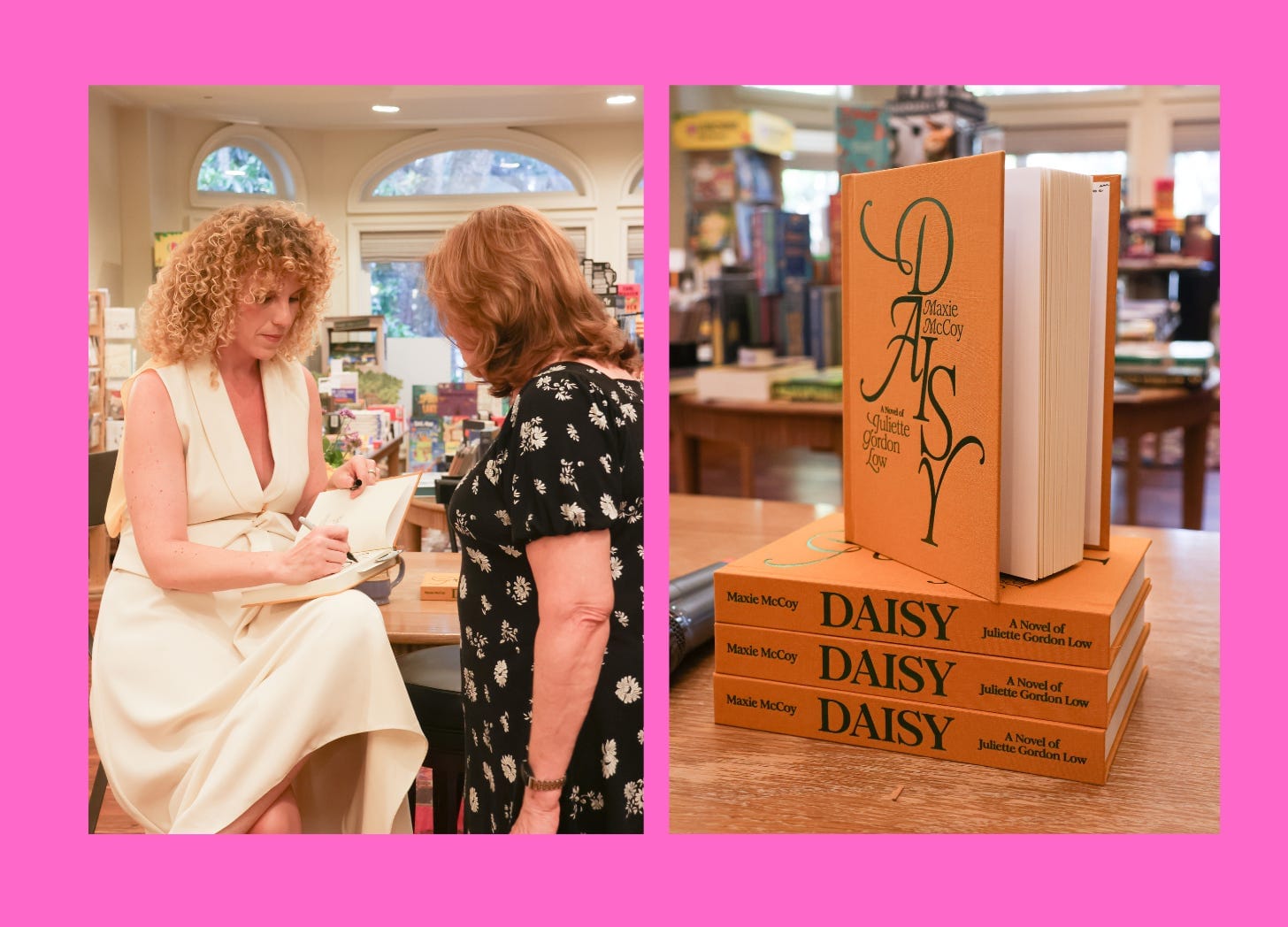
- Cover design and page layout: $668.60. Once the manuscript was complete, costs shifted to design, printing, and distribution. The cover and layout was done with the absolute STUD of a print designer, Raissa Pardini, who used a special typeface by designer Margot Leveque. Raissa believed in my work, understood that Daisy was also an artist, and charged me less than her typical fees. How lucky am I?!
- Printing books: $16,380. I printed my books with boutique Bay Area printer Edition One Books.
- Additional production and administrative costs: $486.60
- Book inserts: $248.18. Every copy has a cute little library card insert ($123.18) and the first 100 books included letters from me ($125).
- USPS shipping to readers: $969.20
- Warehousing: $0. If not for a dear friend with extra space in his warehouse, I would’ve paid a few thousand dollars to store pallets of books.
- Family investment: $5,000. When I called my parents—in tears—to tell them Daisy was shelved for now by big publishing, but that I was planning to spend more money to print 100 copies, they asked what it would take to print 1,000 instead. They seeded $5,000 to help kick off a larger print run, which I plan to pay back once I’ve recouped costs from book sales.
Total spent to write, design, print, and ship the book: $30,752.91
That’s the full cost of taking the book from idea to readers’ hands. But then! I had to throw a book launch party. Because, we love to celebrate!
- Food and beverages: $338.66
- Hair and makeup: $170
- Photography: $450
- Party supplies: $82.51
- Juliette Gordon Low quarters for goodie bags: $100.45
- Total party cost: $1,141.62
Total Overall Cost: $31,894.53
That’s what it took—financially, logistically, and emotionally—to bring Daisy into the world.
What financial lessons did you learn from self publishing?
It is expensive to print something beautiful—inside and out. This wasn’t typical self-publishing, where you release a low-cost book on Amazon and everywhere books are sold. I chose a limited-run, no-ISBN, special-edition novel that you can only buy directly from me. So far, I’ve recouped about a third of my costs.
The biggest financial lesson, though, is that not all investments are tangible. Yes, a book is tangible. But the real return was something else entirely: The experience of writing a truly effing fantastic story that readers love, and of refining the craft of fiction and storytelling in a way that has seeped into all of my other nonfiction work.
It hasn’t “paid off” in purely financial terms, yet, but it has paid off in spiritual ones.
What unexpected financial costs came up during the writing and publication of your book?
Honestly, I underestimated how many international readers would buy the book. Mailing books within the U.S. is very cost-effective thanks to Media Mail—a special USPS postage rate you have to ask for that’s surprisingly cheap if you’re sending books. (Pro tip: It’s not automatically offered.)
Media Mail doesn’t work internationally, though, so in some cases I was sending a book where the postage cost nearly half the price of the list price of the book itself. That was a financial modeling error on my part.
What were the biggest differences between self publishing and traditional publishing?
It’s like comparing apples and oranges. When you create a book yourself, you’re doing everything, from staying up late triple-checking hanging words in the margins, to printing the book and reading it for the 200th time to catch copy errors. You pay for everything—page design, cover design, editing, and the printer itself.
Now, if I’d done typical self-publishing, there are plenty of cost-effective services that handle the entire process. But because I was creating something special and limited, I chose a very high-touch approach. That means I carried all the upfront costs—but I also keep every dollar I make.
With traditional publishing, the trade-off is the opposite. They take a significant cut of book sales because they provide everything needed to create, distribute, and sell the book. If anyone is interested in comparing publishing routes, I always point them to Jane Friedman’s Book Publishing Paths.
What was the toughest part of writing a novel, financially and/or emotionally?
Financially, the hardest part was continuing to invest in something with no guarantee. Even now, when I look at the numbers, I swallow hard at how much I spent to bring this book into the world. I’m proud of myself—I made it work. I didn’t go into debt. I kept saving. But sometimes I ask myself: if I had $35,000 more in my investment account, would I feel better than I do walking into a friend’s house and seeing my marigold linen book cover on her coffee table? I believe my answer is hell no, but for someone else, that might be a hell yes.
Emotionally, anyone in my life would tell you the book consumed me. I used to joke that the longest relationship I had during those years was with a dead woman. Daisy was all I talked about. It was the event of the season—every season—for more than three years.
I learned a really big lesson from that—one that was hard, but necessary. It brought me back to what I know to be true: Write because you love to write, because it’s part of making sure women’s stories don’t go untold. And stay in the joy of the process, because you cannot control the outcome.
Publishing the book must have felt like a huge moment! But once you were over the initial promotion period, how did you feel?
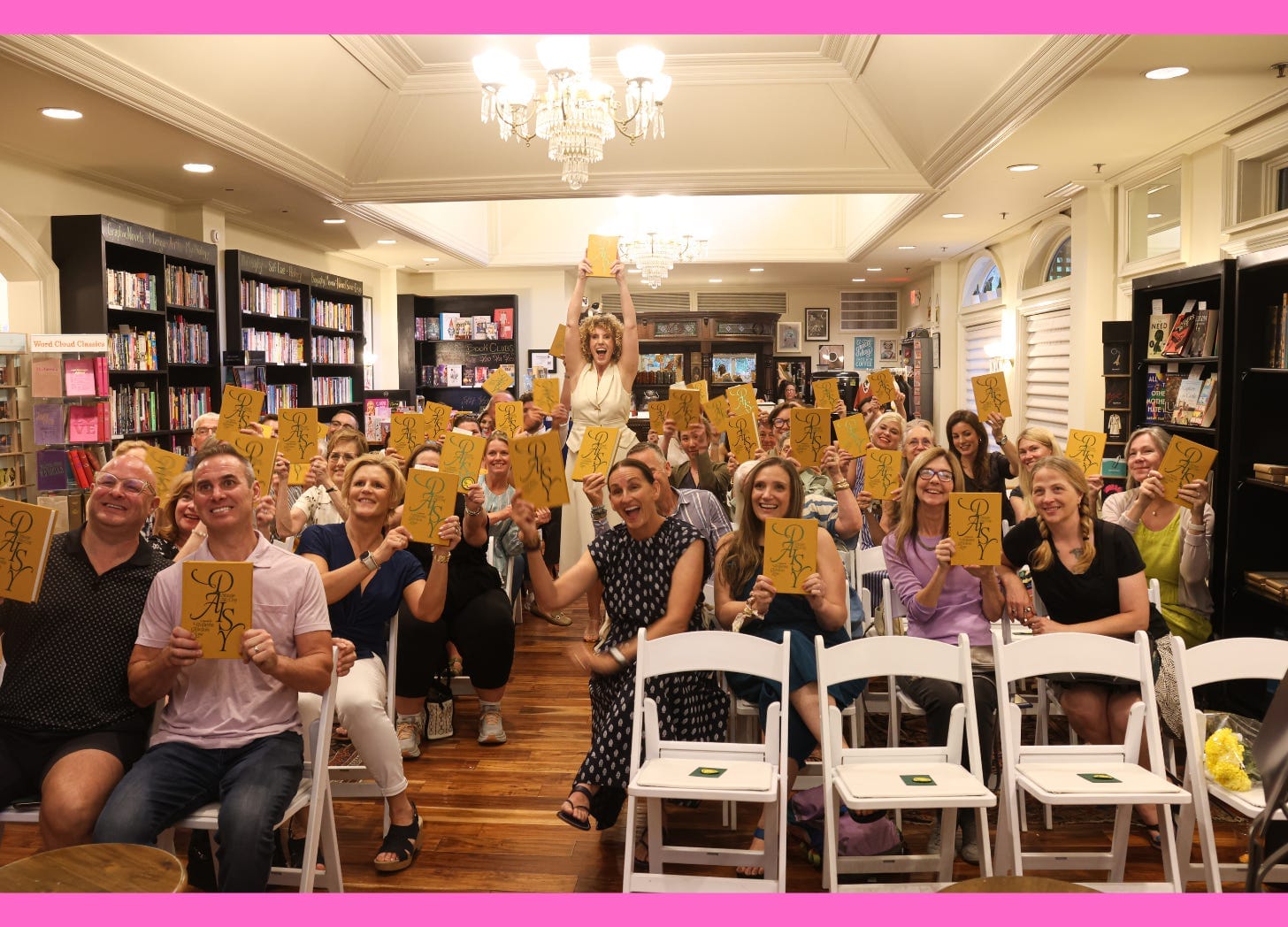
Authors are known for having a pretty big comedown after publication. I definitely experienced that with You’re Not Lost. But Daisy was different. Once she was out in the world, I felt an overwhelming sense of peace, joy, and ease. Maybe it was because I’d been through this before. Or maybe it was because I had fought so hard, spent so much, and endured real heartbreak to bring Daisy to life. But let me tell you, my community, my family, and my best friends were there every step of the way. At the Daisy book party, I continually returned to tears looking out at all the people who kept me going through this very long process. Nothing…NOTHING…is done alone!
And now, seeing Daisy out in the world—on shelves at my local bookstore E. Shaver—and hearing how much readers loved her and cried while reading, is incredibly special.
What’s next for you and for the book?
What’s next for Daisy is simple: I hope she finds her way into the hands of the people reading this right now. If you love historical fiction, authors like Kristin Hannah, stories that make you feel something, or books that look beautiful on your shelf, I think you’ll love Daisy. Supporting this book means supporting my work as a writer and artist committed to making sure women’s stories don’t go untold—and I’m deeply grateful for that support.
As for me, I’m already onto the next chapters. I’m writing a new novel about Evangeline Adams, the most famous astrologer of the early 1900s, our first true “celebrity” astrologer, and the reason astrology became legal. It’s SO witchy and fun. I’m also writing a screenplay about Jackie Silva, the first-ever Olympic beach volleyball player, who sacrificed her career, relationships, and homeland in the fight for equal pay in professional sports. Every confident female athlete we cheer for today stands on a court she helped build in the ’90s, after the world tried to erase her.
I’m about halfway through both projects—so wish me luck as I work to bring these women’s stories to life next.
Thank you so much for sharing your story, Maxie! You can purchase a copy of Daisy: A Novel of Juliette Gordon Low directly from Maxie’s website!
Are you interested in sharing the cost of a pivotal life moment? Just reply to this email, and we’ll reach out.
Lindsey here, just jumping in to say that Maxie was the best book buddy a girl could ask for! Our first meeting in San Francisco (when I was in town for the Money Diaries book tour) was epic! She’s the real deal! ↩


