


Last week, news broke that the federal government is not going to fund the Supplemental Nutrition Assistance Program, or SNAP, in November amid the ongoing government shutdown. The next day, Rabbi Sarah Hronsky opened the doors of the North Hollywood Interfaith Food Pantry to the organization’s busiest day since the Covid-19 pandemic. By the end of her shift, the pantry had served 33% more community members than is typical, and the shelves were quickly depleted of food.
Demand at the pantry was already up 26% this year, owing to other emergencies like the California wildfires, the Hollywood strike, and rising unemployment. Not to mention that with grocery prices already so high—and seemingly no relief in sight—many people found that their SNAP benefits weren’t lasting the entire month, and they were increasingly turning to food banks and pantries to fill the gaps.
Rabbi Sarah doesn’t expect the uptick to ease any time soon. Tomorrow, November 1, some 42 million people could see their monthly grocery budgets slashed dramatically as the federal government withholds SNAP benefits. (There is some hope depending on the outcome of a lawsuit brought by dozens of states against the federal government.) With no access to SNAP, tens of millions of people—including many children and elderly folks, as well as the disabled—could struggle to get the sustenance they need. One-eighth of the U.S. population. In one of the richest nations in the world.
The average SNAP recipient receives $188 per person in food aid each month. Volunteers like Rabbi Sarah at food banks across the U.S. are preparing for an influx of people who can’t make ends meet without these benefits. But it will take a lot to make up for the federal contribution to SNAP. For every meal food pantries supply, the federal government provides nine. Or I should say, our tax dollars do, which are now being weaponized in the ongoing shutdown.
Still, many of us feel moved to help in some small way, and it’s always worth highlighting the helpers in these kinds of situations. Rabbi Sarah says cash donations make the biggest difference. But food banks could also use volunteers to help with the influx of need. If you have time and ability, she encourages you to contact your local food bank for open shifts. For New Yorkers, New York Cares is a great organization with a ton of volunteer listings across the five boroughs.
Additionally, many pantries have Amazon wishlists filled with the food they need the most. (One of my local food banks, for example, is asking for various Thanksgiving-related items.) Nonperishable staples are the way to go: Beans, rice, pasta, and canned fruits and vegetables are in high demand, as are proteins like canned tuna, salmon, and chicken.
Rabbi Sarah also says food banks need less obvious contributions, like pet food, diapers, and hygiene products (particularly feminine hygiene). For dog and cat food and nonperishable food donations, pop-top lids are encouraged, because homeless community members (as well as some disabled folks) may not be able to use (or own) a can opener.
“Pet food supplies, hygiene products, and diapers, they’re expensive,” says Rabbi Sarah. “With SNAP benefits depleting so fast, people can’t balance that out.”
If you’re able, Rabbi Sarah suggests making any donation or volunteering a recurring habit.
“I’m going to beg people to donate and to volunteer, give where you can,” she says. “It might be your time. It might be a click on Amazon. And we have to keep doing it, not just this week, but the next and the next and the next.”
While I’m focused on helping as much as I can, I also wanted to voice the deep anger I feel that our government officials seem to have no problem inflicting this pain on their constituents and their children. SNAP dates back to the Great Depression and has never been disrupted like this before. What does it say about the direction our country is heading in that it’s happening now? Maybe the best way to rectify this situation is to call your elected officials and tell them to take action. The organization 5Calls can help you find their numbers and other contact info.
-Alicia
Lindsey here! My birthday is coming up in November, and I was planning to offer another big discount on annual subscriptions to The Purse. We’ve decided to take this opportunity to also donate a portion of every new annual subscription to local food banks.
Starting today (October 31) and running through November 30, you can get an annual subscription to The Purse for $45.60. We will be donating $5 of every new annual subscription to a food bank. Leave us a note when you sign up, and we can direct the donation to the food bank of your choice. Otherwise, we’ll be donating to Food Bank NYC.
Thank you all for supporting The Purse and by extension helping wider communities in need!
SNAP in the news
- The U.S. Department of Agriculture has $5–$6 billion in emergency funds it could tap during the shutdown, but it refuses to do so, despite highlighting the money just one month ago in a government shutdown contingency plan.
- More on neighbors stepping up: In Portland, Oregon, the owner of a coffee shop said his business had raised over $86,000 to help feed people losing food benefits. His shop is also one of many Portland-area restaurants giving free food to people in need.
- And on social media, communities across the country are pairing “grocery buddies,” or one neighbor who can offer support to another in need.
- The President of the United States has made no secret of his desire to inflict pain on populations that did not vote for him. But the SNAP cutoff comes at the same time that health care premiums are rising dramatically (among many other price increases). In both instances, the hardest-hit communities could be those in red states.
- While cutting off SNAP now is an emergency, President Trump’s 2025 domestic policy bill significantly cut spending on the program overall, while expanding work requirements. That means less people will qualify in the years to come.
- Erin Boyle of Make/Do has a helpful roundup of ways to support food banks and mutual aid groups in New York City.
- Shoutout to Kate V., one of Alicia’s favorite creators, whose content typically focuses on low-budget grocery hauls. She’s a great follow all of the time, but she’s been posting videos and guides for supporting food pantries and low-income families.
- Friend of The Purse Marc Typo wrote about his experience growing up in a family who relied on SNAP benefits (and his 93-year-old grandmother still does). Marc included a link to J.P. Hill’s thought-provoking essay on why mutual aids are not enough, and why now is the time to also organize the poor in the U.S. in collective action. (Though goodness knows it’s not just the poor who should be organizing and speaking up in this moment.)
What Else We’re Talking About
- While the SNAP cuts are happening and the government shutdown drags on, I’ve been tracking layoffs from large private employers over the past few weeks. There’s been tens of thousands of them, with indications more are on the way. Meanwhile, the stock market, driven by tech stocks, keeps hitting record highs. Hard to argue with the “K-shaped economy” theory. -Alicia
- On a totally different note, my former R29 colleague Anabel Pasarow (who also was a Money Diaries editor at one time) just launched a very funny and relatable newsletter, Possessed. If you’re looking for hilarious writing on the life of a 30-something, I highly recommend! -Lindsey
- I scare really easily, so I rarely watch or otherwise consume horror content. But I look forward to Jezebel’s Halloween scary story contest every year. You can read the 2025 winners here; make sure you check out the comments (and past year iterations) for even more. This Halloween week, I’ve also been watching Hill House on Netflix for the first time. It’s definitely scary, but there’s enough other stuff going on in the show that I can handle it—so far! -Alicia
Quote of the Week
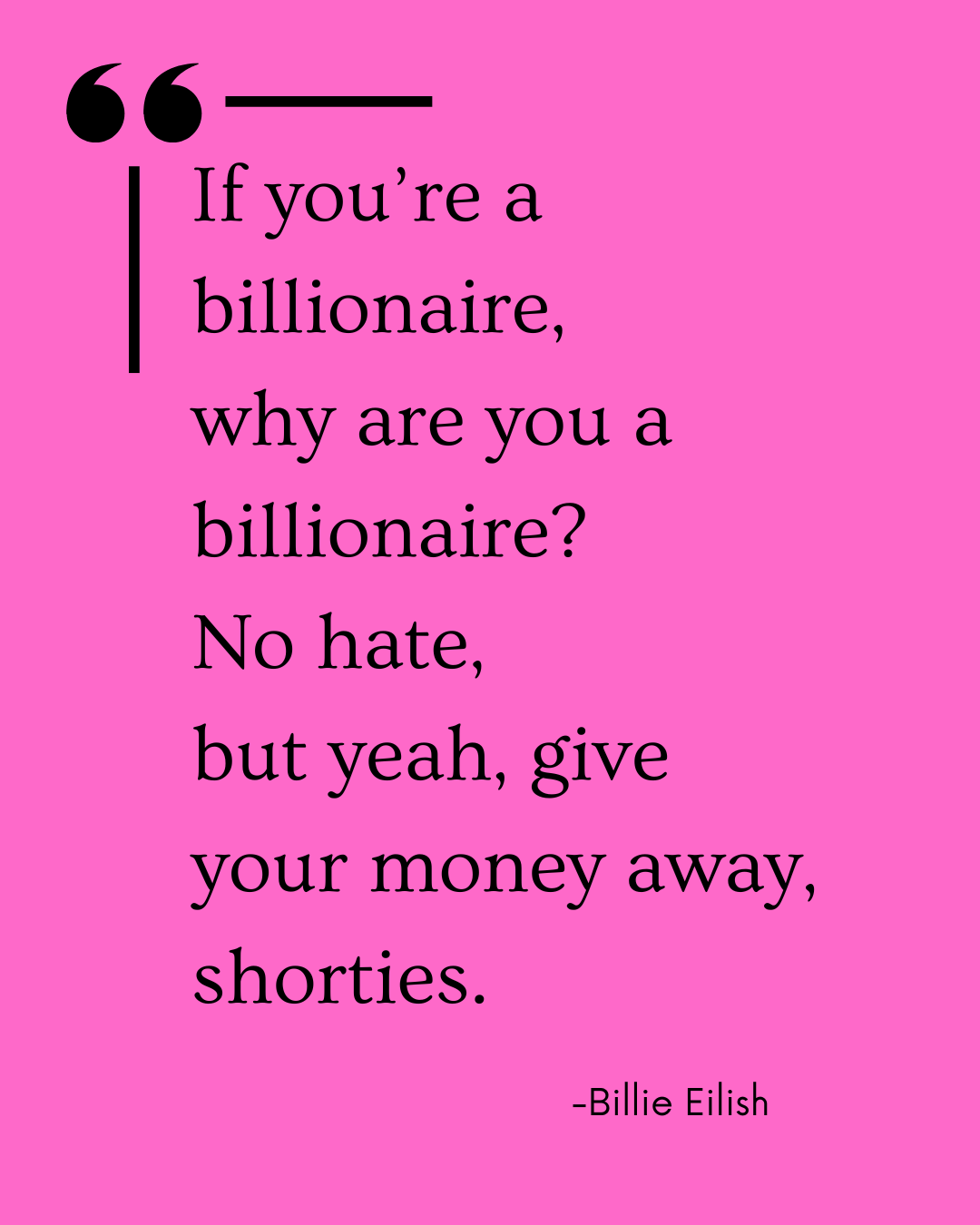
Billie Eilish said the quiet part out loud at the WSJ Magazine 2025 Innovator Awards on Wednesday night.
On Our Radar
- Halloween and the New York City Marathon are hands down my two very favorite days in NYC. Halloween is all about the kids—I love when my Instagram feed fills with cute kiddos in costumes! But the marathon is just the most amazing and inspiring display of resilience and dedication. The marathon organizers, New York Road Runners, teamed up with the Tribeca Film Festival for a short documentary on the largest (and best???) marathon on Earth, Journey to the Finish Line of the NYC Marathon. You can stream on YouTube! - Lindsey
- I am also excited for the marathon (it makes me cry every year) and will be stationed in the Upper East Side cheering on my friend Jen, among many others. Go Jen! - Alicia
- Next Thursday, November 6, I’m joining fellow journalists Peter Moore and Kelcey Ervick for a panel on how to build a successful newsletter on Substack. Tickets are $20. You can learn more and register here. -Lindsey
Best Money We Spent This Week
- Aside from food, my main expenditure this week was a vet visit for my cat, Sofia. She’s 11 and has had a few issues typical for senior cats over the past few weeks, but it looks like we’re in good shape now and shouldn’t have to go back. $650. -Alicia
- Ugh, anyone following along on my Instagram stories knows I had to replace my hot water heater last weekend after our old one broke and flooded our laundry room. We were without hot water for three days, and it confirmed two things for me. 1) I will not survive the apocalypse because I could barely make it two days without a shower. 2) My home is very important to me, and it’s worth investing in it. We all felt so much better once hot water was restored. I feel weird sharing the total here (I know, I know!), but it’s like my friend Heather wrote recently: Everything costs $1,000! -Lindsey


