Today's newsletter is sponsored by Faye.
Learning that my best friend Trey Williams was moving back to New York City after too many years away was one of the more exciting developments of 2022. Better still, Trey and I would be working together at the same company, it was summertime, and we had so many plans for his return to NYC.
In other words, the vibes were very, very good. So when he called me the day he was scheduled to start his drive from Kansas City, Missouri, to his new apartment in Harlem, I wasn’t exactly expecting the update he gave me: He and his partner, Grace, had awoken that morning to find the U-Haul packed with all of their belongings—clothes and diaries and records and other mementos—had been stolen. All that was left was a smattering of glass on the asphalt and a box or two of toiletries that hadn’t been packed the night before. Now, they only owned, quite literally, the clothes on their backs and a few houseplants.
This is the third edition of What It Cost Me, our series detailing what life’s big events and decisions truly cost. It’s not as cheery as the first two, but I think about what happened to Trey and Grace all the time, and I wanted to give him a little space to discuss the financial as well as emotional implications of the robbery. According to what U-Haul told him, it’s not particularly rare for one of their trucks to get stolen—something to keep in mind if you’re ever packing for your own move!
When Trey and Grace did make it to New York, they had to slowly replace everything they owned, from their mattress to dishes and bowls to junk-drawer scissors—no easy feat on a journalist and a teacher’s salary. But over the past three and a half years, they’ve made a beautiful home in New York, the kind you can’t put a price on. - Alicia
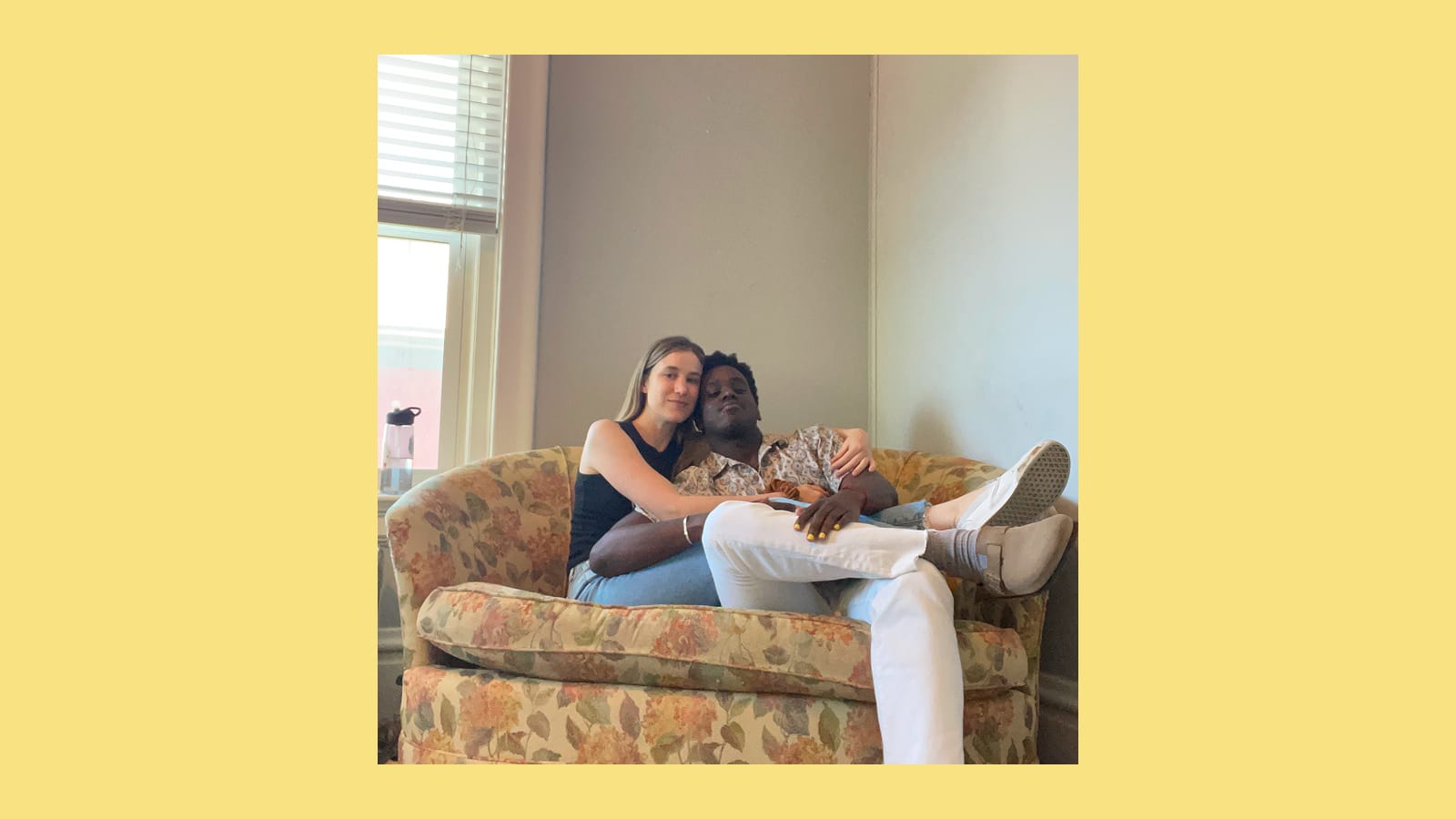
Name: Trey Williams
Age: 34
Location: New York City by way of Kansas City
Relationship status: Partnered
Why did you decide to move from Kansas City to New York?
I grew up in Kansas City, but I’ve been coming to New York since I was kid for Christmas, the odd Thanksgiving, and after my grandfather’s funeral. My mother was born in Brooklyn and then grew up on Long Island, and my dad was born and raised in Buffalo. New York always felt like an inheritance of sorts, the family heirloom sitting just out of reach until I came of age. So after college I moved to the city, working as a financial journalist writing about the entertainment industry.
I was 25, living with two roommates in Crown Heights, making just north of $50,000 a year. While I’ve always loved New York, at the time it felt like the only way to take a step forward in my life and career was to leave the city for a job writing about the business of Hollywood in Los Angeles. You know how they say the best way to get a raise is to change jobs.
I did that for a couple of years before ending up back in Kansas City, and by that time I just kind of felt that itch to get back to the city that was always pulling at me. The majority of my friends and community were in New York, the kind of life I’d always wanted to live was in New York, a good chunk of my family was in New York, and I was in a fairly new relationship with the person I could see creating that life with.
Cross-country moves are expensive. How did you financially prepare for it?
I have to be honest here and tell you that I’m not the best when it comes to budgeting and financially preparing for things like major life events.
That said, I’ve moved across the country more than a few times, so I’m pretty practiced at what it takes to make it happen. I was making $80,000 as an editor in Kansas City, which was more than a decent salary considering the cost of living in the middle of the country.
I also, for the first time, wasn’t making the cross-country move alone, so I was able to split the costs of things like the $2,100 for the U-Haul we crammed with everything we held dear, the Airbnb that was going to be the halfway marker in our journey, and the move-in costs—security deposit and first month’s rent—for our one-bedroom Harlem apartment.
The one cost that did catch me off guard was the $2,350 I had to shell out to break my lease in Kansas City—the timing of the move and starting my new job in New York left me no other choice.
Unfortunately the new gig didn’t offer to reimburse any moving costs, but I was able to cover some of the hit of that and the miscellaneous expenses that typically eat away at the bank account by selling my car—which I absolutely was not bringing to New York—and withholding a portion of my 401(k) when I rolled it over. I didn’t want to end up completely bereft after landing in New York… little did I know.
What was your experience on the morning of the move?
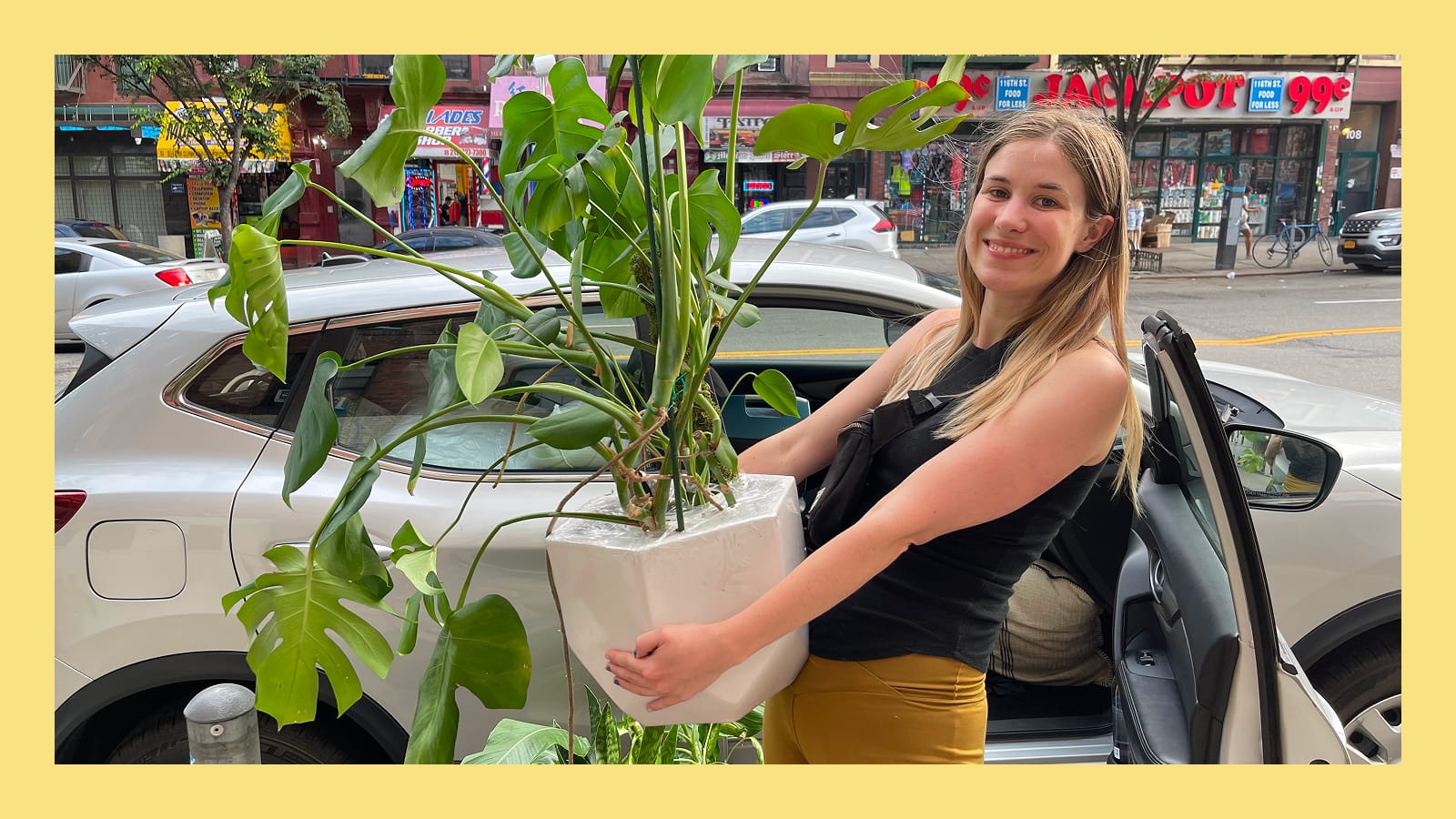
It’s been a few years now, so I’ve been able to develop a bit of a twisted humor about losing everything. We woke up on the air mattress in the center of my empty Kansas City loft apartment, and the last thing I remember saying before we went downstairs to put our final belongings in the truck—two bags with clothes for the road, toiletries, and a few boxes of plants—was, “And now, the moment of truth.”
My partner and I had jested after packing the U-Haul with everything we owned the day before about what if: What if someone were to break into the U-Haul? But I don’t think either of us actually thought there was any world in which we would open the front door of my apartment building to find nothing but broken glass scattered along the street. We had parked the U-Haul right out in front of my building, under street lights, and in view of security cameras affixed to the rear of a bank across the street.
It was incredibly early because we’d meant to be on the road first thing, and it was eerie, too. It was the morning of July 4th, which was a Monday, and in the Midwest means that all weekend everyone had been partying and setting off fireworks. So on the morning that we stood there, across the street from where the U-Haul we’d rented should have been, it was abnormally still. And we were shocked into silence at the scene of everything we owned missing.
What happened after that?
It felt like we stood there in disbelief for ages, but in actuality, we leapt into action surprisingly quickly. With hindsight, Grace and I have been able to cling to any scrap of positives that came out of the trauma, so we’ve always praised how we handled the situation. Grace actually told me, with years of distance between us and that day, that in that moment any uncertainty she had about our future together was put to ease.
We called 911 almost immediately, but of course it was the Fourth of July, so we sat on hold for about 20 minutes. Ultimately the police told us to head to the nearest precinct to file a report. I took pictures of the scene on my iPhone; no one would ever ask to see them, nor would they seek to solve this crime.
I, of course, became obsessed with the question of who did this. Who now had the record collection my father passed down to me? Who had the Morehouse sweater my dad could be seen wearing on the weekends, my birth certificate, my partner’s diaries dating back two decades?
We called a friend, who drove us to the police station, where we filled out a report, which required us to give an account of everything that was in the truck and how much it was worth. Impossible. Could I simply write “everything I own” and “priceless?” That wouldn’t have gotten us anywhere. So we focused on the big things: TV, bed, mattress, couch, appliances, shoe and record collection, etc.
We went to U-Haul to make a similar report and see about the insurance we had paid for. Turns out the insurance only covers the truck and damage to things in the truck, and this little wrinkle, in which the entire truck was stolen, not only meant we weren’t covered, but if the truck wasn’t recovered then we could have been held responsible for the cost of it.
Footage from my apartment building's security cameras showed a man wearing shorts hop out of a car, walk around the U-Haul, and check the lock on the rear door. Then he just breaks the driver’s side window and drives off with our entire lives. We even went to the bank across the street to see if they’d be willing to give the police security footage if they came asking, but the cops never did.
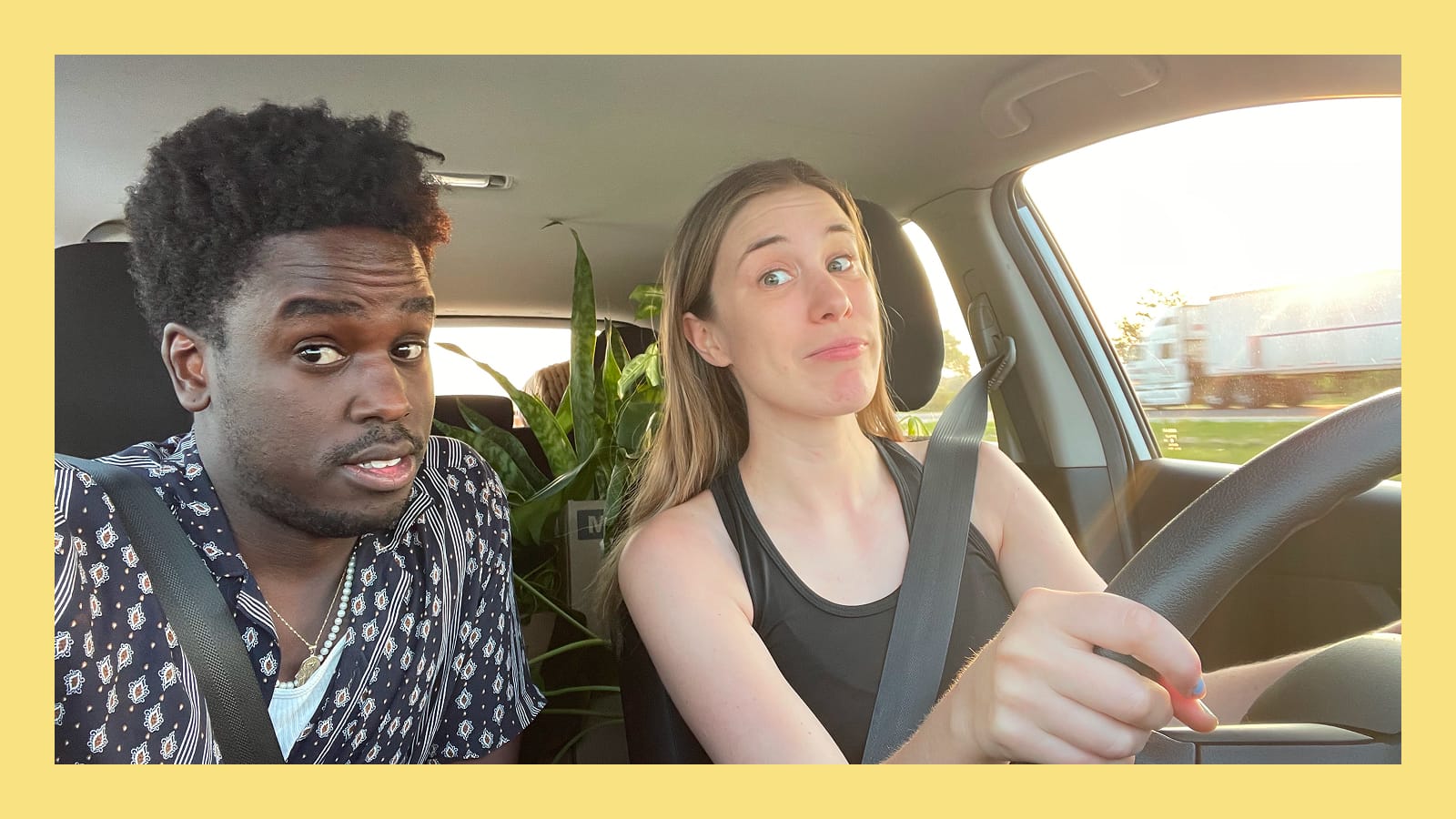
They did find the truck later that day, though, empty. After we’d done all we could, I called my mother, who rented us a car for the drive to New York, made us dinner, and gave us a place to sleep. We only ended up delaying our trip by one day.
Emotionally, what was it like to lose your belongings?
You know, they consider this kind of thing a nonviolent crime, which makes sense to me logically, but I felt violated beyond measure, like an assault deep in my being. It’s really hard to put into words and feel like I’ve done the feeling justice, but in the snap of a finger, everything that I had come to associate with who I was—who I presented to the world through the clothes I wore, my obsessions and hobbies, the past versions of me as told through keepsakes I had tucked away in a box in my closet—weren’t just gone; they were taken away from me.
Everything after that kind of became impermanent.
Can you estimate the cost of what was stolen?
We definitely tried. Sitting at my mother’s kitchen table that night, listening to Motown and old soul and R&B records from the ’60s and ’70s, Grace and I put together a GoFundMe, and we set our fundraising goal at $25,000.
There was virtually no way to accurately value all the things we’d separately accumulated over years of moving from city to city, and all of the things that had no monetary value but could never be replaced. To be honest, we probably undervalued our belongings by that metric, but the point really was to simply have a starting place for rebuilding our lives.
What happened with the U-Haul?
Well, we didn’t have to pay for the stolen truck, and we even got a refund for the cost of the rental, minus the taxes and additional fees—like the useless insurance we paid for. But I remember us sitting on hold with U-Haul in the rental car on our way to New York trying to negotiate for a full refund on the $2,100 we spent on something we never even got to use.
At first U-Haul offered to refund us $1,050. But after having little else to do on our drive than strategize, we eventually convinced them to give us $1,200. We didn’t get the full $2,100 back, but at that point, anything was a win.
Last I actually saw that sad 15-foot box truck, it was sitting in a Kansas City Police Department impound lot with a shattered driver's side window and empty cargo. If memory serves, the police found the truck abandoned in some lot. U-Haul apparently doesn’t equip its trucks with any sort of tracking; it’s too expensive, and they actually get stolen all the time.
We did get one thing back: Someone found Grace’s old school and work IDs on the side of the road and brought them to the police. The police didn’t ask any questions.
What has it been like to replace everything? Were there unexpected costs, or things that surprised you that you needed to repurchase?
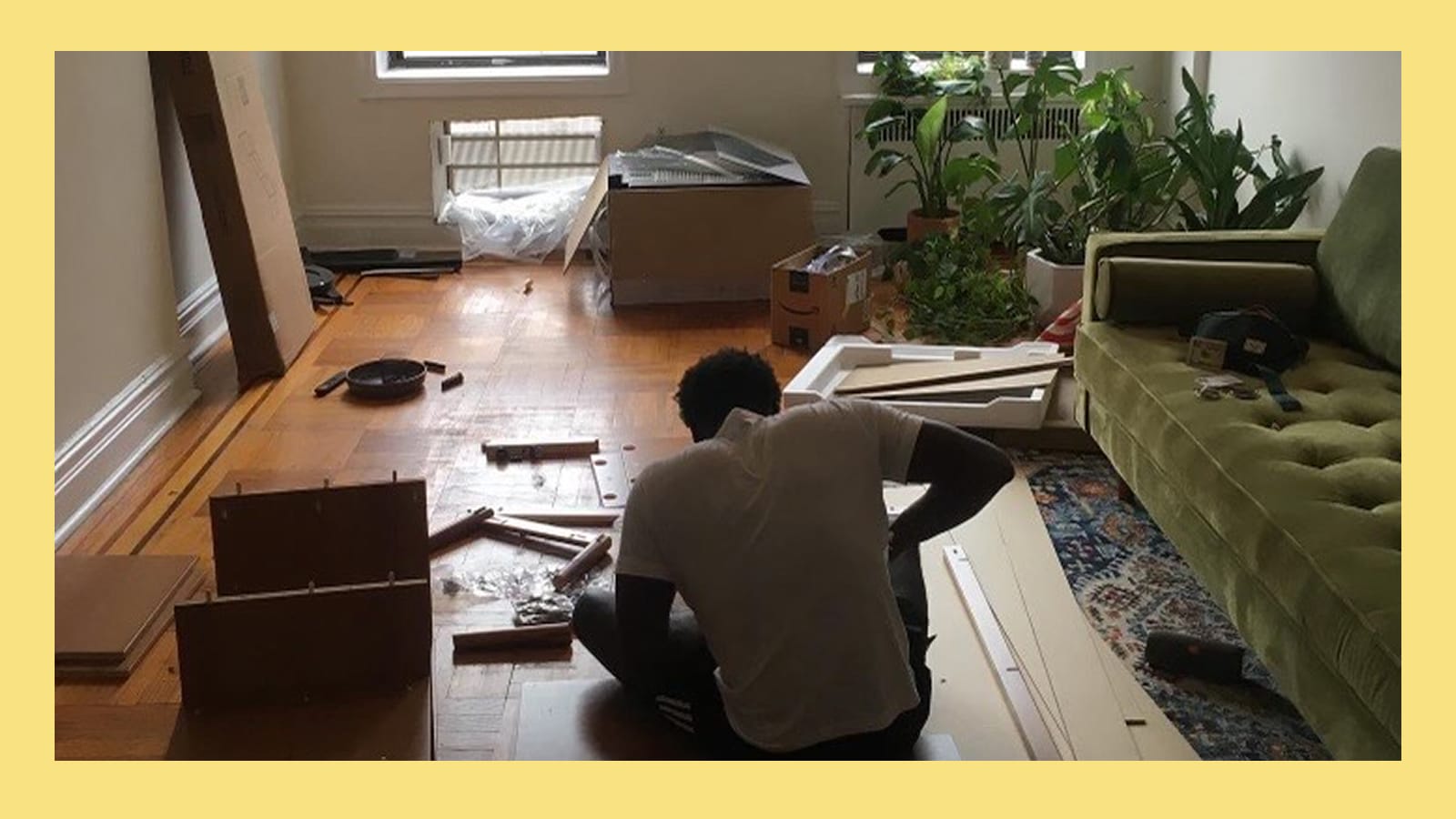
It’s so weird, but I don’t think about it anymore. Grace and I used to look around at our apartment and be reminded in every tchotchke and throw pillow that all the furnishings in our lives were new, that they were things that didn’t quite yet feel like our things, you know?
That said, in the immediate aftermath of the theft, as we attempted to settle into life in New York, there was a curious confluence of trying to be discerning and intentional about the furniture and necessities we bought, and then the Supermarket Sweep mad dash to just have, you know, any plate to eat off of, or any pair of jeans because we had none.
Even now, nearly four years later, we find ourselves looking to replace some random shirt or bowl that we bought during that weird time when we had no bowls or shirts, so we just bought whatever to fill the void.
It’s kind of cliché at this point, but the things that were unexpected or that surprised me only came to mind when we’d spill some cat litter and then think, “Oh, I guess we should get another vacuum.” The amount of runs to Target and the hardware store in our neighborhood that first year in New York were innumerable.
Many people stepped up to help you in the aftermath. What was it like asking for and receiving that aid? Did it change how you bought new things?
It would have been so incredibly hard if not for it being necessary. Neither Grace nor I like to ask for help or rely on people for fear of seeming like a burden. That is probably why we ultimately downplayed our GoFundMe goal. It’s weird, though; we were angry and helpless about the fact that everything we’d owned had been stolen but incredibly diffident when it came to moving forward. Even when my mother offered to pay for the rental car so that we could still make the drive, I was hesitant.
That feeling got even more complicated once we actually started replacing things. We had family members, for example, who rather than just donating to the GoFundMe wanted to help out in specific ways, like buying our dining room table or the air conditioning units for our apartment, and they were willing to help in any way we needed. But there was this feeling that we couldn’t ask them to buy the table we actually wanted because it was too expensive, so we settled for the cheap version so as not to seem that we were ungrateful or asking for too much.
Having the money from the GoFundMe helped a little in that respect because it meant we were a step removed from the gracious people who donated to help us out. So, for example, when it came time to buy a dresser, my partner and I debated whether to buy a more affordable pressed wood dresser just to have something—though we’d likely be replacing it in a few years time—or shell out close to $700 for a vintage mid-century modern dresser we’d ostensibly have for the rest of our lives. We went the more expensive route.
So although being gifted the money made it feel like we had to simply be practical with how we used it, being in the position to wholesale replace everything gave us different considerations when it came to quality, need, desire, and the things we often buy on a whim only to turn around and discard.
What was the toughest part of the experience, financially and/or emotionally?
Financially, we managed, though the entire ordeal did leave us to reexamine our relationships to money. The toughest part was the mental aspect. Like I mentioned, Grace had been keeping journals since she was 11 years old—those were all stolen. I had sweaters and T-shirts and albums that had belonged to my father, who died when I was in college, and all of those things were gone, too.
On top of that, Grace had never lived in New York before, or even a big city. It was already going to be an unbelievable adjustment for her to get used to the density, speed, nature, and culture of the city. Then you add on top of that running around department stores, boutiques, and thrift stores in a New York heat wave scrambling to buy clothes to wear to work every day, and it took its toll on us individually and added conflicts in our relationship that had to be worked out while we were already under mounds of stress.
Do you have any other takeaways from the experience?
It is honestly wild to look back and remember all that we went through over the course of that day. For both Grace and I, though, by the time we went to bed on the pull-out couch in my mother’s basement, we had a newfound confidence in our relationship.
Not only had we spent the day being trauma bonded together, but we would we come to tussle with how financially intertwining our lives would change the nature of our relationship. We tackled such a daunting setback in a manner that belied the fact we’d only been dating a year. We somehow found comfort that night—on a pretty uncomfortable pull-out—in the only thing we now had: each other.
We left the next morning armed with a vow to still enjoy our cross-country road trip to move to New York and the start of our lives together. And I think that’s kind of a beautiful thing.
Thank you, Trey, for sharing your story! If you’d like to share your pivotal life story for a future edition of What It Cost Me, just reply to this email, and we’ll reach out.
More to love
- In a crowded world of AI tools, sometimes you just need a real person to actually complete all the stuff that’s been sitting on your to-do list. Faye pairs you with a real, local assistant—think best friend meets personal assistant meets project manager who actually gives a damn. Phone calls. Appointments. Reimbursements. Hounding you until things actually get done. Get 20% off your first month with code THEPURSE at findfaye.com. #partner
- Alicia rounded up some of the best salary negotiating advice we’ve collected since launching our new series, Work History. So many amazing pearls of wisdom here!
 Alicia Adamczyk
- Don’t forget: Every Monday, we’ll be chatting about a different question. This week, it’s layoffs (which unfortunately is timely). We’d love to hear how friends and former colleagues helped out after you lost your job—or how you pitched in to support a friend.
 Alicia Adamczyk