


This newsletter is brought to you by Greenlight.
Quick before we dive into today's newsletter. Ahead of the Super Bowl, we’re wondering: Do you or your spouse/partner bet on sports? Are you betting on the Super Bowl? Fill out this form to let us know. We'll be sharing what we learn on Instagram (but it will be anonymous)!
Over the past few decades, academics and policymakers have been focused on taking the friction out of saving and investing money. Whether it’s promoting auto-transfers to savings accounts or auto-escalations in retirement accounts, the goal has been to take the hassle out of doing the right thing for your financial future.
And many of these tech-enabled advancements have arguably had a positive impact on the average person’s money management. Plenty of you can think of one or two systems that have helped you save more or invest more consistently, whether it’s your employer enrolling you in your 401(k) without you needing to opt in, or setting up auto-pay on your credit card so you never have to worry again about a late payment.
But over the past few years, it’s become more clear that automation and streamlining processes can also have deleterious effects. Removing the friction of manually making deposits into your savings account might be a good thing, but eliminating any and all hurdles to buying anything under the sun is not.
A little friction, I’ve increasingly come to believe, can be a good thing.
I’m certainly not the first to suggest making things a bit harder on yourself can actually be a boon to your finances. That line of thinking is why all-cash budgets can be popular strategies for saving money; physically handling your budgeted dollars makes them a little more difficult to spend, and if you run out, well, you can’t just keep swiping a card for more. You’re putting obstacles in your own way.
There is also an increasingly popular movement to embrace friction in other parts of life; see: the backlash to generative AI. Tech companies, especially, make a lot of money when their apps and products work as seamlessly as possible and their algorithms keep you scrolling. They can think for us, take tests for us, craft emails for us—even be our friends so we don’t have to do the hard work of making a real one. Understanding how these “friction-elimination tools,” as The Cut called them, work can also have a big impact on your money, which I wrote about last year.
Anyway, back to your financial habits, specifically. Think about all the ways companies have made it easier for you to spend money without thinking too hard about it: auto-renewing subscriptions, buy-now-pay-later options integrated into every store’s checkout system, “buy now” buttons that bypass shopping carts, and more access than ever to credit cards and other debt instruments, which can be saved into a retailer’s system so you don’t even have to get off the couch to get your wallet when you want to make a purchase from your phone. And let’s not even get into betting apps and digital prediction markets, which have made it easier than ever to gamble.
The popular food delivery app that some of us may default to after a long day is literally called Seamless. And the ease with which you can use it belies the fact that food delivery (or having an on-demand driver, etc.) is a luxury for most people, not a necessity. But meal planning and cooking our own food every day takes a lot of work, so we understandably shell out for the treat. No judgement from me; I ordered ramen last night.
Conveniently, the same companies continuously reducing the friction it takes to purchase something sure do add a lot of friction to the experience when users wish to cancel those subscriptions, request refunds, or simply talk to someone when something goes wrong. They know adding a few extra steps to the process means you’re likely to just give up.
So how can you make the things that drain your bank account a little more difficult to access? We all have our own rules when it comes to spending and saving, but implementing some stricter ones can be a good start. That’s where tips like “wait 24 or 48 hours to buy something” or “delete your credit card autofill data” come into play. Jumping through even a single hoop in order to buy something very often means you won’t, especially if it’s an impulse purchase.
More broadly, adding some friction can be an antidote to overconsumption. If you’re able, that could mean implementing bigger lifestyle changes like canceling your Amazon Prime membership and making the trek to the store when you need to buy something. (I know some people are going to push back against this one specific example, but let’s all give me the benefit of the doubt and know that I’m talking about the people who live near other stores, aren’t swamped with childcare duties, are able bodied, etc.) A smaller step: allowing yourself to order from online stores only one day each week or month.
I think we could all do with adding a little sludge to the mix if we’re trying to change or just be more mindful of a specific financial behavior. Coined by Cass Sunstein, the well-known scholar behind the “nudge” theory of behavioral economics, “sludge” basically refers to red tape. It will make some things inconvenient—and that’s the point.
So much of automation is marketed as being about efficiency or freeing up time for us to do other things. But what are the other things we are then free to do? Spend more time on another billionaire’s app? Maybe life is all the friction we optimized out along the way.
-Alicia
Consumer friction in the news
- A couple weeks ago, we covered “looksmaxxing,” or the attempt to maximize one’s physical attractiveness. Well, “friction-maxxing” is a play on that. (Writing this essay made me feel a little bit like Pete Campbell from Mad Men—the idea already existed out there, but I arrived at it independently!)
- In a related essay on friction in the broader economy, the economist Kyla Scanlon writes: “Friction isn’t the enemy!!!! It’s information. It tells us where things are straining and where care is needed and where attention should go.”
- A related topic: enshittification. Tech platforms have perfected taking your money; meanwhile, their core products get worse and worse.
- Speaking of adding friction to the cancellation process, the Biden Administration implemented a “click to cancel” rule that would have required businesses to make it as easy for consumers to cancel subscriptions as it is to sign up for them. That rule was blocked by a federal appeals court.
- That said, both the House and Senate have introduced bipartisan bills that would require companies to make it easier for consumers to cancel subscriptions and memberships.
- Recent research has found that auto-enrollment and auto-escalation might not be the amazing panaceas to America’s retirement crisis we all hoped.
- Friend of The Purse Hanna Horvath also covered friction-maxxing.
- Kate Lindsay, who writes the newsletter Embedded, recently wrote about how horrible it is to deal with customer service bots that won’t actually solve your problem.
What else we’re talking about
- My nine-year-old is obsessed with getting a “day job” (his words), and because I don’t believe in paying him to do chores (I don’t get paid to do laundry), I’ve been trying to come up with tasks he could do to earn extra cash. (Any suggestions?) The other project on my to-do list? Find a way to pay him. Many of my mom friends rave about Greenlight, which is a family finance platform that offers debit cards for kids. Added bonus: There are a lot of smart safety features, including family location sharing, so as Freddy begins to be more independent, we can stay connected. Greenlight plans start at just $5.99 a month. Click here for more info. #Partner
- I could link to 12 different things related to the devastating Washington Post job cuts this week, but this story about Martin Weil, who has worked on the local news desk since 1965 and was one of those let go, really got me. -Alicia
- Over on Platonic Love, Aliza Sir wrote a beautiful essay about her infertility experience and her 2026 resolution to get comfortable asking for help. -Lindsey
- Another WaPo-related tidbit: The federal government reportedly couldn’t get into a WaPo reporter’s phone it seized because she had it in Lockdown Mode. I wasn’t familiar with that setting, but it feels like something more of us should be using for our own privacy. -Alicia
On our radar
- Over the next few months, we’re teaming up with Babylist to do a deep dive into 530A accounts (aka Trump Accounts) as well as all things related to helping families build their savings. As part of the partnership, we’re looking to speak to real people about their experiences saving up for a baby. Want to share your story? Fill out this form. We really want to tell all kinds of stories, from those getting help from grandma and grandpa to anyone who’s wondering how the heck they’re going to afford daycare. Everything will be anonymous. We promise it will be fun!
- My friend Chancellor has a new newsletter called Content Never Sleeps about his TV/movie/culture recs. He’s a long-time entertainment journalist who now works at Netflix. Check it out! - Alicia
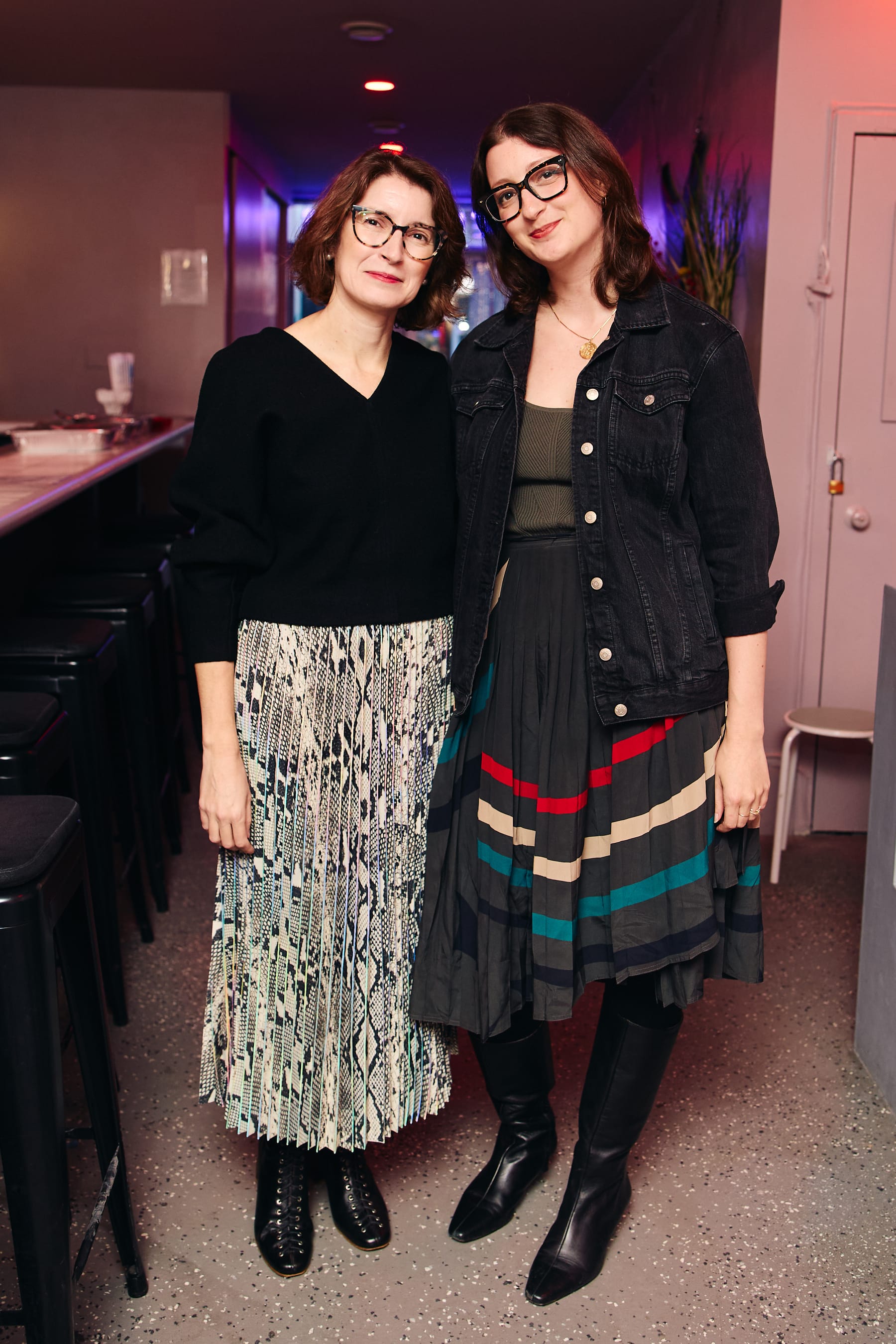
- We celebrated the website launch and rebrand on Tuesday with a bunch of our nearest and dearest at Beverly’s in Chinatown. It was the most fun time! A big thank-you to Greenlight for sponsoring the event!
What else we published on The Purse this week
It was our first full week publishing daily content. Here’s what you might have missed!
 Lindsey Stanberry
(for paid subscribers)
 Alicia Adamczyk
 Alicia Adamczyk
 Trey Williams
Our latest What It Cost Me!
 Lindsey Stanberry
Comment of the week
“I’m ambivalent about kids but also want my parents to be grandparents, and I hate that time marches on/aging considerations!” -Ana on “The decision to (finally?) have kids in your 30s.”
Stat of the week
Retirement balances are 30% lower for employees 50+ with student loan debt and 20% lower for those ages 18 to 49. - Fidelity Investments research
Best money we spent this week
- I did a good job not spending too much money this week, but I did subscribe to Christine Tyler Hill’s mail club to get her paper zine sent to me each month! ($8) - Alicia
- My kid asked if we could stop by the bodega and buy a bag of Takis on the walk to piano lessons, and it felt nice to say yes to such a small treat (and was hilarious watching him try to eat the spicy chips). I’ve been working a lot lately, and I'm trying to savor our time together. ($3) - Lindsey


